
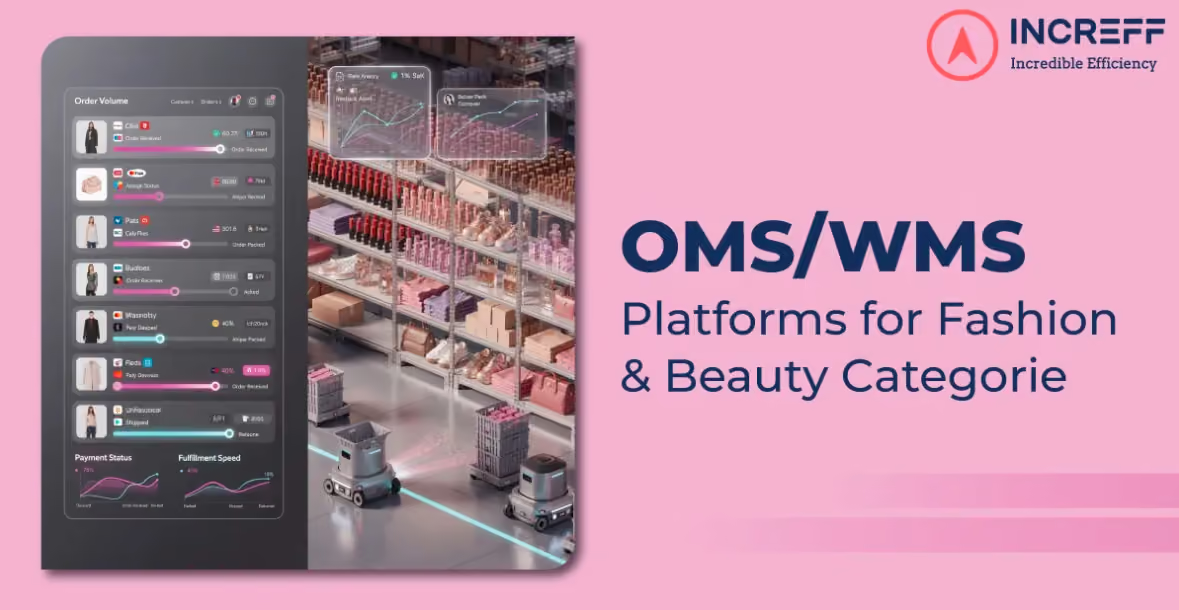





If you run operations, supply chain, or e-commerce for a fashion or beauty brand, you already know the pattern: a new drop goes live, orders spike across your D2C site and marketplaces, inventory goes out of sync between stores and warehouses, and returns start flowing back before the next launch even lands. In categories where SKUs explode by size/shade/style and speed matters, the biggest risk isn’t demand it’s execution.
IHL Group estimates that out-of-stocks, overstocks, and returns cost retailers about $1.1 trillion annually worldwide, much of it driven by inventory inaccuracy and fulfillment friction. That’s where Order Management Systems (OMS) and Warehouse Management Systems (WMS) comes in. They help brands orchestrate inventory, route orders intelligently, and run faster, more accurate fulfillment especially when the platform is built with fashion and beauty realities in mind.
Key takeaways
- Which fashion- and beauty-focused OMS/WMS platforms are worth evaluating and what they’re best at
- What capabilities matter most for variants (size/shade), peak demand, and high returns
- How to compare platforms across inventory accuracy, integrations, and scalability
- How to think about implementation, ROI, and support expectations
- Where Increff fits if you need omnichannel inventory and fulfillment control
What unique challenges do fashion and beauty brands face in order and warehouse management?
Fashion and beauty industries face distinct complexities in order management. One major challenge is managing diverse product variations. Styles, colors, and sizes create a vast array of stock keeping units (SKUs). This complexity demands precise inventory control.
High return rates also pose a challenge. Fashion items often see returns due to fit issues. Efficient return management processes are essential to maintain customer satisfaction.
Seasonal trends further complicate inventory management. Products must be stocked or reduced in anticipation of trends. Understanding seasonal demands is key to minimizing overstock and stockouts.
A specialized system should handle these challenges effectively. It can provide solutions like:
- Advanced inventory tracking
- Integrated returns management
- Support for complex SKUs
Selecting the right OMS/WMS platform helps navigate these unique challenges, improving overall operational efficiency.
Which features should you look for in a fashion and beauty OMS/WMS platform?
When selecting an OMS/WMS for fashion and beauty, focus on features that address industry-specific needs. Inventory management tops the list, as it ensures accurate stock levels and prevents stockouts.
Another crucial feature is order processing. Efficient systems streamline orders from multiple sales channels. This integration simplifies operations and enhances customer experience.
Consider platforms with robust returns management solutions. They facilitate seamless returns, crucial for maintaining customer loyalty in the fashion industry. Moreover, systems should support complex SKUs, accommodating various product attributes like size and color.
Look for comprehensive analytics and reporting tools. They provide insights into sales trends and customer behavior, vital for strategic decision-making. Additionally, real-time inventory tracking and data updates can significantly enhance accuracy and response times.
Essential features include:
- Inventory Management
- Order Processing
- Returns Management
Useful analytics features involve:
- Sales Trends Analysis
- Customer Behavior Insights
Choosing a platform that offers these functionalities can lead to more efficient operations and improved customer satisfaction.
Which OMS/WMS platforms are designed specifically for fashion and beauty?
Fashion and beauty retail isn’t just about moving inventory. You’re dealing with fast-changing demand, heavy SKU complexity (size, color, shade), and high return rates. The systems you choose need to handle all of that without breaking under scale.
Here are platforms that are far more aligned with those realities:
Manhattan Associates
A strong enterprise OMS + WMS used by large global fashion and lifestyle brands.
What it does well:
- Advanced order orchestration across channels
- Real-time inventory visibility across stores and warehouses
- Strong fulfillment logic for complex retail networks
Best for: Large retailers that need deep control and scale
Blue Yonder
Combines planning and execution, which is critical for fashion cycles and demand volatility.
What it does well:
- Demand forecasting and replenishment
- AI-driven inventory optimization
- End-to-end supply chain visibility
Best for: Brands that want planning + execution tightly connected
Unicommerce
Widely used by high-growth fashion and beauty brands, especially in omnichannel setups.
What it does well:
- Centralized order, inventory, and warehouse management
- Real-time inventory sync to prevent overselling
- Strong automation for high order volumes and fulfillment workflows
Best for: D2C and omnichannel brands scaling rapidly
Vinculum
Focused on enabling brands to manage multiple sales channels and marketplaces efficiently.
What it does well:
- Real-time inventory and order processing
- Marketplace and logistics integrations
- Strong support for omnichannel operations
Best for: Brands managing complex multi-channel ecosystems
RELEX Solutions
Not a traditional OMS/WMS, but highly relevant for fashion and beauty due to its planning strength.
What it does well:
- Demand forecasting and allocation
- Inventory optimization across stores and DCs
- Helps reduce stockouts and excess inventory before execution
Best for: Retailers who want to fix inventory decisions upstream
Increff
Sits at the intersection of planning and execution, built for fashion, lifestyle, and beauty retail etc.
What it does well:
- Real-time inventory visibility across channels
- Demand forecasting, allocation, and replenishment
- High-accuracy warehouse execution with scan-based tracking
- Improves buying and merchandising decisions before inventory hits stores
Best for: Brands that want to connect merchandising decisions with execution and avoid costly inventory mistakes upfront
How do fashion and beauty OMS/WMS platforms compare in a feature matrix?
Evaluating OMS/WMS platforms requires a keen eye on their features. Understanding what each platform offers helps businesses make informed choices. Comparing essential features can highlight which system aligns best with your needs.
A feature matrix is a helpful tool for this evaluation. It provides a side-by-side comparison of platforms, detailing their capabilities. Key elements to consider include inventory management, scalability, and integration options.
Key features often compared are:
- Inventory Tracking
- Scalability Options
- Multichannel Support
- Real-time Analytics
- Integration Capabilities
Using this matrix, businesses can efficiently assess which platforms meet their operational requirements. This approach ensures that you select a solution that can grow with your business and adapt to future needs.
How should you think about integration and scalability?
Seamless integration is crucial when choosing an OMS/WMS for fashion and beauty. Businesses need systems that connect effortlessly with existing tools.
Scalability is equally important as businesses grow. Platforms must accommodate increasing volumes and complexity without performance dips. This adaptability is key to long-term success.
When evaluating systems, consider:
- E-commerce platform compatibility
- Third-party logistics integration
- Growth flexibility and modular expansions
Select a system that supports not only your current needs but future growth as well. This strategic foresight ensures sustainability in a competitive market.
What are implementation best practices for fashion and beauty brands?
Implementing an OMS/WMS requires meticulous planning. Fashion and beauty brands must prepare thoroughly to avoid hiccups. Testing systems in a controlled environment is crucial before going live.
Engaging staff early in the process ensures smooth transitions. Training sessions help employees navigate new systems confidently. The more familiar the team is, the smoother the implementation.
Key practices for success include:
- Conducting detailed needs analysis
- Setting realistic timelines
- Offering ongoing support and training
Efficient implementation sets the stage for effective order and warehouse management, propelling brands towards operational excellence.
What should you expect for cost, ROI, and support?
Investing in an OMS/WMS can be a significant expense. However, the potential return on investment (ROI) makes it worthwhile. Enhanced efficiency and reduced errors help boost profit margins over time.
While evaluating costs, consider subscription fees, implementation charges, and possible customizations. Choose a system that aligns with your budget while meeting operational needs.
Support is a critical component in this journey. Look for platforms offering comprehensive support packages. Features to prioritize include:
- 24/7 customer service
- Regular software updates
- Access to user forums and resources
These elements can aid in smooth operations and higher customer satisfaction, leading to better ROI.
What future trends will shape fashion and beauty OMS/WMS?
The fashion and beauty industry constantly evolves, pushing OMS and WMS platforms to adapt. Upcoming trends focus on seamless integration and enhanced user experience.
Artificial intelligence (AI) plays a pivotal role. Many systems will leverage AI for demand forecasting and inventory optimization. This can lead to smarter business decisions and improved efficiency.
Sustainability is also gaining traction. More platforms are expected to incorporate features for tracking eco-friendly practices. Trends to watch include:
- Enhanced AI capabilities
- Sustainability tracking tools
- More robust mobile applications
These innovations are set to redefine how fashion and beauty businesses manage their operations in the digital landscape. By staying ahead of these trends, companies can maintain a competitive edge and meet growing consumer expectations.
How can Increff help fashion and beauty brands improve order and warehouse execution?
If your biggest bottlenecks are inventory accuracy, faster fulfillment, and smoother returns across channels, Increff is purpose-built for retail and helps fashion and beauty brands close the gap between demand and execution.
Where Increff fits in this stack:
- Omnichannel inventory visibility and availability: Improve confidence in what’s sellable (by location, channel, and promise date) so you can reduce cancellations and overselling.
- Smarter order routing and fulfillment decisions: Route orders to the best node (warehouse, store, or dark store) based on rules like proximity, inventory health, service level, and cost-to-serve.
- Warehouse execution and productivity: Strengthen putaway, picking, packing, and dispatch workflows with process discipline and real-time operational control—critical during drop days and sale peaks.
- Returns and reverse logistics support: Help standardize returns flows so returned inventory can be inspected, reconciled, and made available to sell faster where appropriate.
- Integrations that match retail reality: Connect with e-commerce storefronts, marketplaces, ERPs, and last-mile partners so teams don’t run operations off spreadsheets and manual reconciliations.
The outcome is typically fewer inventory-related exceptions, faster order cycles, and better customer experience without forcing a complete rip-and-replace of your existing commerce stack.
Conclusion
Selecting the right OMS and WMS for fashion or beauty requires understanding your unique needs. Consider both current operations and future growth plans.
Evaluate each platform's features and compatibility with existing systems. Seamless integration with e-commerce and third-party logistics is crucial. Invest time in exploring demos and seeking user feedback. A well-chosen system enhances efficiency, supports scalability, and strengthens your competitive position in the market. Make an informed choice to empower your business for long-term success.
Request a demo.
Frequently asked questions
Q: What’s the biggest difference between a generic OMS/WMS and one designed for fashion/beauty?
A: Fashion/beauty-ready platforms tend to handle high SKU complexity (size/shade/style), frequent launches, high returns, and omnichannel fulfillment with fewer workarounds—especially around inventory visibility, allocations, and returns workflows.
Q: How should I evaluate whether a platform can handle peak events (sale days, drops, festive spikes)?
A: Ask for references in similar order volumes, test with peak-like load scenarios, and review how the system handles real-time inventory updates, order routing rules, and exception management when inventory mismatches occur.
Q: What integrations matter most for fashion and beauty ecommerce?
A: Typically: your commerce platform (D2C), marketplaces, ERP, POS (if stores are involved), shipping/last-mile partners, and returns/reverse logistics tools. The goal is a single source of truth for inventory and order status.
Q: How do I know if my returns process needs an OMS/WMS change (vs. just policy tweaks)?
A: If returns are creating inventory blind spots (returned stock not reconciling quickly), causing high cancellations, or driving customer complaints about refunds/exchanges, you likely need tighter system workflows and inventory visibility—not just policy adjustments.