
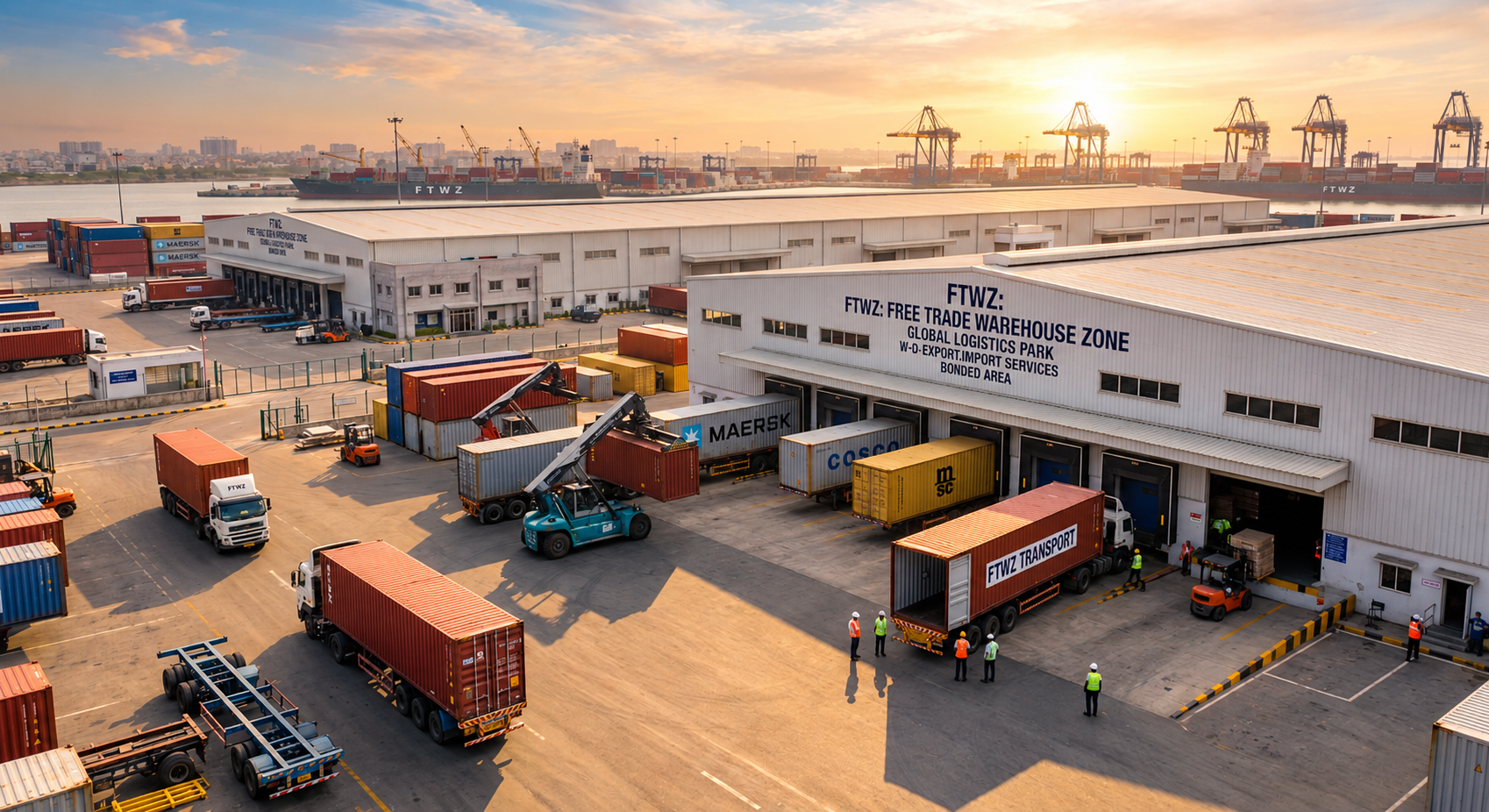


📌 At a glance: Ascent FTWZ, the free trade warehousing business of Singapore-headquartered CapitaLand, moved to Increff WMS and has since run at 100% inventory accuracy on inventory worth more than ₹1,000 crore. The shift came from real-time operations, item-level serialized inventory and a fully paperless floor, replacing a process that depended on manual discipline.
What Is This Case Study About?
This case study examines how Increff's Warehouse Management System (WMS) helped Ascent FTWZ reach and hold 100% inventory accuracy inside a Free Trade Warehousing Zone (FTWZ), where every unit must be traceable back to the document it arrived on. A domestic warehouse usually only needs to know that stock exists and matches the books. An FTWZ has to prove the origin of each piece on demand to customs officials.
Ascent FTWZ is led by Hemant Kejriwal, CEO, who took over operations and found the warehouse heavily dependent on the manual discipline of its floor workforce. Increff WMS replaced that dependency with serialized, real-time, paperless tracking.
Client Overview
- Client: Ascent FTWZ, Panvel (Navi Mumbai), owned by CapitaLand, a Singapore-headquartered real estate fund
- Industry: Free Trade Warehousing / Bonded Logistics
- Warehouse Format: Free Trade Warehousing Zone (FTWZ), a customs-bonded zone where importers store goods without paying duty until the goods enter the domestic market
- Inventory Value Held: More than ₹1,000 crore
- Key Challenge: Tracing every individual unit back to its receiving document, under customs scrutiny, without relying on manual discipline
- Objective: 100% inventory accuracy, not 99.9%
What Is a Free Trade Warehousing Zone (FTWZ)?
An FTWZ is a customs-bonded warehousing zone where an importer can store goods without paying import duty until the goods actually leave the zone for sale in the domestic market. Duty is paid only at the point of removal, which protects the importer's working capital.
For an overseas brand with an aggressive India expansion plan, that changes what is possible. The brand holds stock in the FTWZ, offers it to the Indian market and commits to 24-hour availability, paying duty and releasing stock only once a sale is made.
Why Is Inventory Traceability Harder in an FTWZ Than a Domestic Warehouse?
With over ₹1,000 crore of bonded stock at stake, inventory precision becomes a compliance question as much as an operational one.
Challenges Faced: Why Manual Discipline and Non-Real-Time Systems Were Not Enough
- Accuracy rested on manual discipline. Record-keeping depended on the care of the blue-collar floor workforce. However disciplined the team was, errors still crept in.
- The SaaS WMS platforms evaluated were not real-time. Ascent FTWZ assessed several SaaS options and found that handheld support and real-time operation are two different things. A system can accept handheld scans and still update inventory positions at intervals, which leaves the floor and the system out of step.
- No unit-level link to receiving documents. Statutory traceability requires each piece to be tied back to its document, which quantity-based tracking cannot do.
- No low-level segregation. Stock needed separation by variant, batch and other business-specific attributes, not just by SKU. An SKU is a product code, not one physical unit.
- Accuracy targets that competitors treat as adequate. At this inventory value, 99.9% accuracy leaves too much exposure. Anything short of 100% would not have worked.
Increff's Solution: Serialized, Real-Time, Paperless Warehouse Operations
Increff WMS met every requirement Ascent FTWZ had set for FTWZ operations.
Real-Time Inventory Sync
- Inventory positions update as work happens on the floor, rather than syncing in batches
- Real-time operation by design, not handheld support layered onto a periodic-update system
Item-Level Serialized Inventory
- Every individual unit of inventory in the warehouse is serialized and traceable back to the document it was received against, as required by statute
- Traces a specific piece or a defined set of inventory when customs officials request a report
- Makes ownership traceable when goods are sold between customers inside the FTWZ
Piece-Level Segregation to the Lowest Level
- Every SKU can be segregated to the lowest level: by variant, batch or any other metric Ascent FTWZ chooses
- Keeps different batches and different traders' consignments of the same product clearly separated
Completely Paperless Operations
- Warehouse execution runs without paper-based records. That removes the transcription and reconciliation errors manual records introduce
- Reduces reliance on individual worker discipline for accuracy
Results: Measurable Impact Delivered by Increff WMS
"Once we moved to Increff, we've had 100% inventory accuracy. And, and I think anything less than 100 doesn't work anyway."
- Hemant Kejriwal, CEO, Ascent FTWZ
Key Outcomes Summary
- 100% inventory accuracy achieved and sustained after moving to Increff WMS
- Every unit of inventory traceable to the document and date it was received against, meeting FTWZ statutory requirements
- Ownership of stock traceable even when goods are sold between customers inside the zone
- Completely paperless warehouse operations, removing dependence on manual worker discipline
- SKU segregation to the lowest level: variant, batch or any other chosen attribute
- Confidence to scale operations without depending on the continuity of experienced staff, because the process is held by the platform
Why Increff for FTWZ and Warehouse Operations?
- Item-level serialized inventory that ties every unit to its receiving document, meeting FTWZ statutory traceability requirements
- Real-time operations by design, not periodic sync with handheld support added on
- Piece-level segregation by variant, batch, or any client-defined attribute
- Completely paperless execution that removes manual-discipline error
- Well-thought-out workflows and a clear roadmap, including a clear position on what the product will and will not do
- Hands-on onboarding and training, with direct access to the Increff leadership and implementation teams
Ready to Trace Every Unit in Your Warehouse?
If your operation carries high-value or bonded inventory and with a free trade warehouse zone where every unit has to be accounted for on demand, Increff WMS gives you serialized, real-time traceability at unit level.
👉 Book a demo with Increff and see what 100% inventory accuracy takes.
Frequently Asked Questions (FAQ)
What is a Free Trade Warehousing Zone (FTWZ)?
An FTWZ is a customs-bonded zone where an importer can store goods for as long as needed without paying import duty. Duty is paid only when goods leave the zone for sale in the domestic market, which preserves the importer's working capital and allows fast local availability.
Why does an FTWZ need a WMS with serialized inventory?
An FTWZ must trace every single unit back to the document it was received against and the date it arrived, because customs officials can request that trail at any time. Quantity-based tracking cannot prove the origin of an individual piece. Serialized inventory can.
What inventory accuracy did Ascent FTWZ achieve with Increff WMS?
Ascent FTWZ has run at 100% inventory accuracy since moving to Increff WMS, on inventory worth more than ₹1,000 crore. At that value, a 0.1% gap runs into crores of stock, so anything short of 100% was unacceptable.
What does "real-time" mean in a warehouse management system?
It means inventory and task status update as work happens on the floor, rather than at intervals. A WMS that supports handheld devices but still syncs periodically is not real-time. Handheld support alone does not make a system real-time.
How does Increff WMS handle stock sold between customers inside an FTWZ?
Sales within the zone are common, so ownership can change while stock stays physically in place. Increff's serialized tracking ties each unit to its owner and its receiving document, so an operator picking a piece can identify who it currently belongs to.
How does Increff WMS reduce dependence on manual processes?
Increff WMS runs completely paperless, scan-based operations. This removes the manual record-keeping and transcription steps where errors were previously introduced, so accuracy no longer depends on the discipline of individual floor workers.
Which businesses benefit most from serialized WMS tracking?
Operations holding high-value or compliance-sensitive inventory: FTWZ and bonded warehouses, 3PLs serving importers and brands in categories where each unit must be traceable by batch, variant or receiving document.