






TL;DR:
Lean, agile, sustainable, and technology-driven are the four supply chain strategies used by leading brands like Walmart, Amazon, Patagonia, and GlobalBees. What connects them all is a solid order management system, the tool that keeps demand, inventory, and fulfillment in sync. This piece breaks down each model, the brand that mastered it, and where an OMS fits in.
Find the Right OMS for Your Supply Chain Strategy
Companies lose an average of $184 million a year to supply chain disruptions, and 94% say it dents their revenue, according to Interos's Global Supply Chain Report. The difference between brands that absorb that hit and brands that don't usually come down to one thing: how their order management system connects demand, inventory, and fulfillment. Walmart, Amazon, and Patagonia have each built a supply chain strategy around this idea, just in very different ways: one leans lean, one leans agile, one leans sustainable.
Supply chain management is the art of getting a product from a factory floor to a customer's door without wasting money, time, or goodwill along the way. Every brand solves this problem differently, but the strongest ones tend to build their strategy around one of four models: lean, agile, sustainable, or technology-driven. Below, we break down each model with a real brand that has mastered it, and show where the right order management software, or OMS, fits into the picture.
Types of Supply Chain Strategies
1. Lean Supply Chain: Reduce Waste and Decrease Costs
A lean supply chain focuses on cutting excess inventory, eliminating waste, and tightening operational efficiency wherever possible. It prioritizes cost control and streamlined logistics over speed or flexibility.
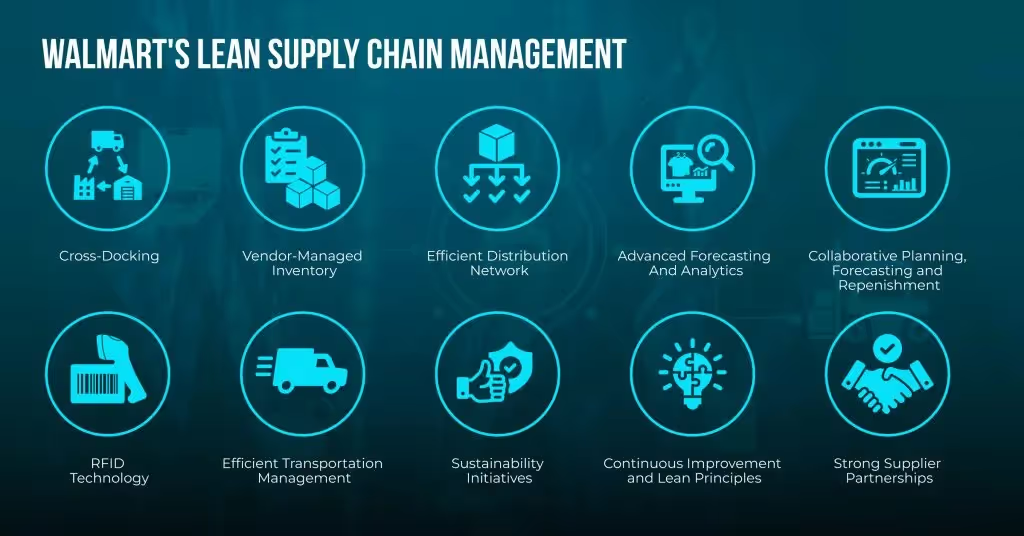
Example: Walmart
Walmart runs roughly 10,600 stores worldwide and pulled in $681 billion in revenue in 2024, according to Marketing Dive. A company operating at that scale can't afford a loose supply chain. Walmart keeps its lean model running through advanced inventory tracking, cross-docking, and close supplier collaboration. Its order management software keeps stores and e-commerce channels stocked without piling up excess inventory, and the underlying OMS is what makes that coordination possible at 10,600-store scale.
Key practices:
- Vendor-managed inventory (VMI), so suppliers stay accountable for timely, quality deliveries
- Inventory optimization and fast order fulfillment, with delivery options built around what customers actually want
- Renewable energy, waste reduction, and ethical sourcing built into daily operations
- Just-in-time stocking backed by data-driven replenishment
Why it works: This approach lets Walmart hold prices down while keeping products on the shelf.
2. Agile Supply Chain: Quickly Adapts to Market Changes
An agile supply chain suits industries with volatile demand, frequent product launches, or fast-moving consumer trends. It asks every process to prioritize flexibility and speed.
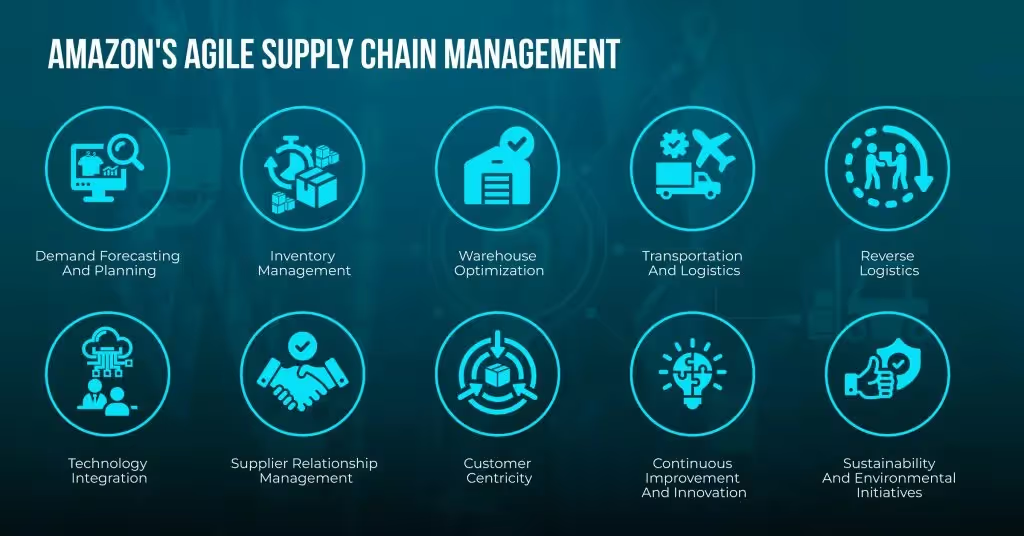
Example: Amazon
Amazon's supply chain is often cited as the standard for agility. Its AI-driven demand forecasting, automated fulfillment centers, and OMS system let it scale up or down fast when customer demand shifts.
Key practices:
- A customer-first culture, laid out plainly in Jeff Bezos's early shareholder letters
- Metrics that turn customer expectations into concrete, trackable numbers
- Small, independent "two-pizza teams" that can move without layers of approval
- Real-time inventory visibility, smart warehouses, and last-mile delivery innovation
Why it works: It enables fast, near-instant deliveries and cuts stockouts, keeping the shopping experience centered on the customer.
3. Sustainable Supply Chain: Eco-Friendly and Ethical
A sustainable supply chain builds environmental and social responsibility into daily operations, aiming to cut carbon footprints and source materials ethically, all while staying compliant and profitable.
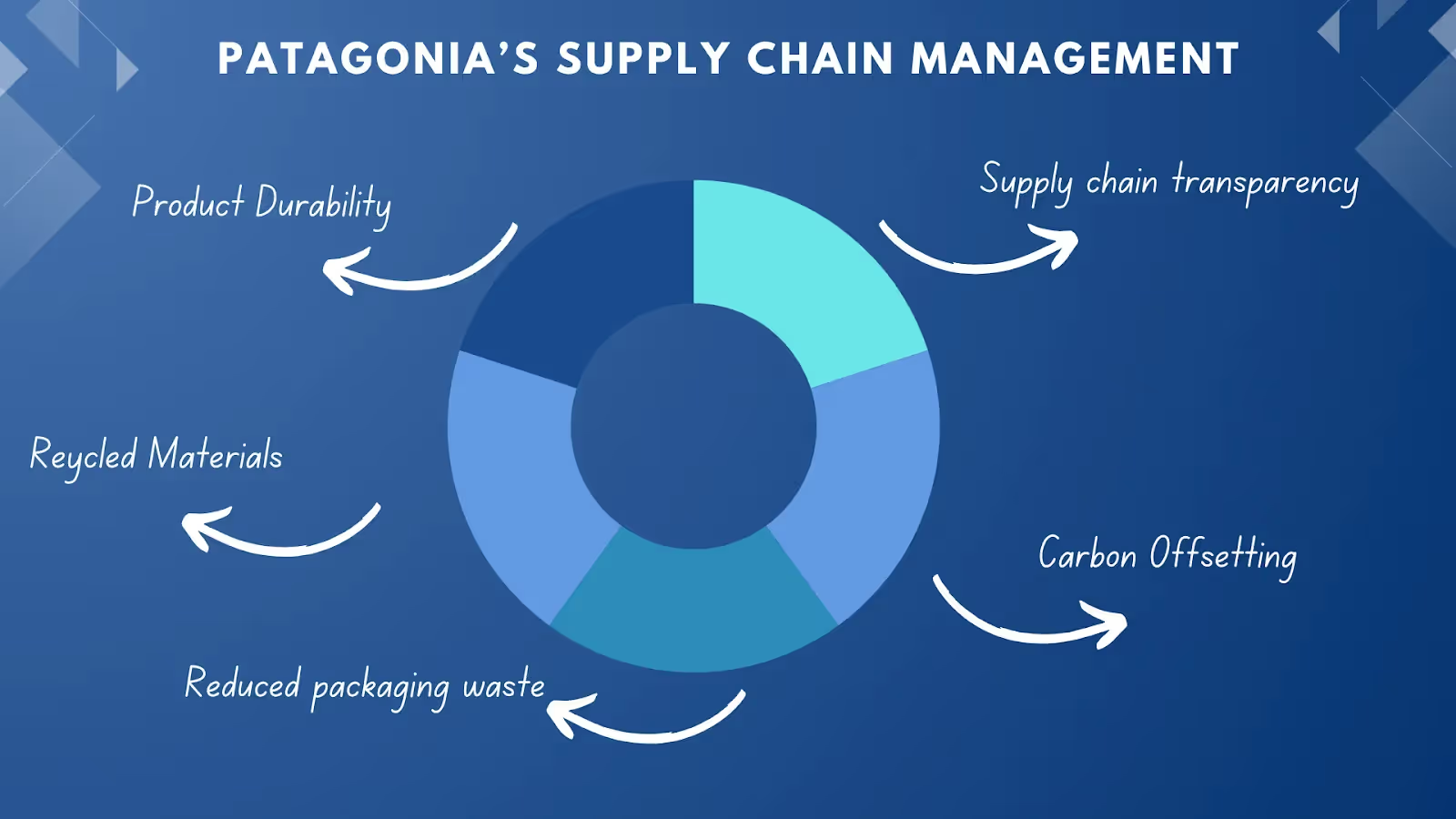
Example: Patagonia
Patagonia runs a well-known Supply Chain Environmental Responsibility Program built to reduce the environmental cost of manufacturing and materials. The brand tracks materials from source to shelf, cuts waste, and leans into circular-economy practices.
Key practices:
- Ethical sourcing paired with active waste reduction
- A closed-loop supply chain with ongoing carbon-footprint reduction
- Energy conservation, water harvesting, and solar-powered factories
- Products built to last for years, which is its own form of sustainability
Why it works: Customers reward brands that take sustainability seriously with long-term loyalty and real brand differentiation.
4. Technology-driven Supply Chain: Automation and In-depth Analytics
None of the three models above work well without technology backing them, whether that's real-time monitoring or waste reduction. A technology-driven supply chain goes further, building automation, AI, and data-driven decisions directly into how inventory moves. This model suits e-commerce brands juggling large assortments across several sales channels.
Example: GlobalBees
GlobalBees, a leading e-commerce aggregator, runs its operations on Increff's OMS, or order management system, to keep its supply chain fast and coordinated.
Key practices:
- Granular demand forecasting so the right inventory lands in the right channel, store or warehouse, all coordinated through one order management software
- QR-based, real-time visibility that cuts stock mismatches and overstocking
- Smart warehousing across 15+ locations, with stock dispatched from the best location to cut lead times
- An OMS system built to keep fulfillment efficient as the brand scales
Why it works: By pairing AI, automation, and a connected order management system, GlobalBees ships faster, carries less excess inventory, and protects its margins while scaling.
Conclusion
Whichever model your business leans on, the right tools make or break it. Increff builds order management software and inventory tools that support all four:
- For lean supply chains: Increff's inventory optimization software stops overstocking before it happens and cuts holding costs.
- For agile supply chains: real-time analytics and demand-forecasting software help teams react fast when trends shift.
- For sustainable supply chains: Increff's supply chain visibility software tracks a product's full lifecycle, so sourcing stays ethical and traceable.
- For technology-driven supply chains: a single OMS system connects every channel, so nothing gets double-booked or lost in transit.
Picking the right supply chain strategy is one decision. Backing it with an order management system built for how your business actually operates is the other half. Increff brings both the technology and the retail expertise to help you get there.
Want to see what an OMS built for your supply chain looks like?
Talk to Increff's team and find out where to start.
Frequently asked questions
Q: What are the different types of supply chain strategies, and when should businesses use each one?
A: The main types are lean, agile, responsive, resilient, and hybrid supply chains. Use lean for stable demand and cost efficiency, agile for fast-changing demand, responsive for quick delivery, resilient for risk-heavy markets, and hybrid when businesses need both efficiency and flexibility.
Q: Which global brands have successfully implemented different supply chain strategies?
A: Toyota is known for lean supply chains, Zara for agile fashion supply chains, Amazon for responsive and fast fulfillment, Apple for highly coordinated global supply chains, and Unilever for resilient and sustainable supply chain practices.
Q: How do companies choose the right supply chain strategy for their business model?
A: Companies choose based on demand predictability, product type, lead times, cost goals, customer expectations, and risk levels. A business with stable demand may choose lean, while one with seasonal or trend-driven demand may need agile or hybrid planning.
Q: What are real-world examples of agile, lean, and hybrid supply chain strategies?
A: Zara uses an agile strategy to quickly respond to fashion trends, Toyota uses a lean strategy to reduce waste and improve efficiency, and many large retailers use a hybrid strategy by keeping core products lean while managing seasonal or fast-moving items more flexibly.
Q: What is the best supply chain strategy for retail, manufacturing, and eCommerce businesses?
A: For retail, a hybrid strategy works best because demand changes often. For manufacturing, lean or resilient strategies are ideal depending on demand stability and supply risk. For eCommerce, responsive and agile strategies work best to support fast delivery and changing customer demand.