





At a Glance
- Full-price sell-through is decided during buying, allocation, and replenishment — not at the point of sale
- Misallocated top-sellers are the most common and most fixable margin leak in retail and D2C brands
- Jaypore improved style availability from 45% to 87% and top-seller availability from 42% to 65% using Increff's smarter inventory allocation
- Across retail brands, Increff's platform delivers 100% fill rates in top-performing categories, 22% increase in top-seller availability, 12% improvement in overall inventory health, and 40% increase in sales
You are six weeks into the season. A few styles are flying — but the stores getting the stock aren't the ones with the demand. Your top-sellers are running thin in Mumbai and Manila, sitting deep in stores that can't move them. The instinct is to markdown. The actual problem is that your merchandising and planning in retail didn't account for where demand would actually show up.
For founders, heads of operations, and ecommerce managers at fashion and lifestyle brands across India and SEA, this is not an unusual situation. It is the most common way full-price sell-through gets destroyed — not by bad product, not by bad pricing, but by misaligned planning merchandising at the allocation and replenishment stage.
Where Sell-Through Breaks Down in Retail Planning and Merchandising
Most brands diagnose a sell-through problem as a demand forecasting failure. It rarely is. The breakdown almost always traces back to three compounding decisions in the planning and merchandising cycle.
Buying without store-level demand signals. When category plans are built on last season's aggregate performance rather than store-level behaviour, you end up with a lopsided inventory position. Deep stock in categories that plateau early. Thin stock in styles that spike. Neither resolves at full price.
Top-seller allocation not tied to store performance. Splitting inventory equally across stores — or defaulting to the same store ranking as last season — is how high-demand styles end up in the wrong locations. A store that tripled footfall last quarter gets the same replenishment as one that's been flat. The top-seller goes OOS where demand is highest and sits unsold where it isn't.
Replenishment running on manual decisions, not demand triggers. By the time a planner notices a top-seller is at 15% stock cover in a high-performing store, you've already lost two weeks of full-price sales. In fashion retail across India and SEA — where trend velocity is high and seasons are short — manual replenishment cycles cannot keep pace.
What Smarter Planning Merchandising Actually Fixes
The brands running 75%+ full-price sell-through consistently are not doing it through markdown discipline. They are doing it by tightening the feedback loop between planning merchandising, store-level demand, and inventory movement.
Here is what that looks like in practice for a retail or D2C brand running 10–50 stores across India or SEA:
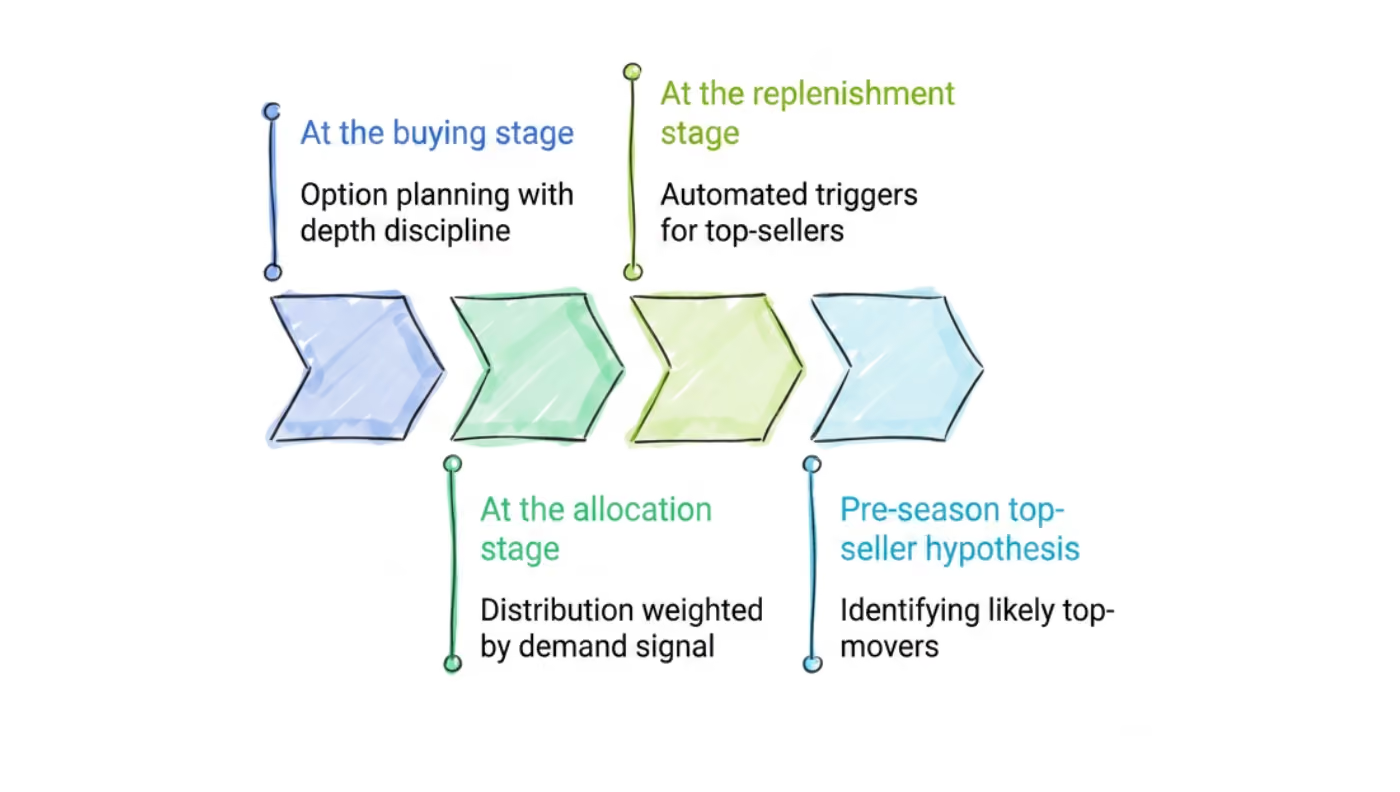
- At the buying stage: Option planning is done by category with explicit depth-per-option discipline. Before the season opens, the team decides exactly how many options to carry per category, at which price points, and in what depth. Stretching a 40-option plan to 55 creates shallow coverage across too many bets.
- At the allocation stage: Distribution is weighted by demand signal — store conversion rates, size curve accuracy, footfall trends — not by equal splits. High-performing stores receive deeper inventory from the first drop.
- At the replenishment stage: Automated triggers flag top-seller availability below threshold at the store level. Replenishment and inter-store transfers (IST) happen in near real-time, not on a weekly manual cycle.
- Pre-season top-seller hypothesis: The planning team identifies likely top-movers before week one — based on last season's data, buyer intent, and price architecture — and builds higher coverage depth for those styles before the season opens.
Real Industry Problems Solved by Increff Merchandising and Planning Platform
Going into the engagement with Increff the numbers told the story clearly for Jaypore
- Only 45% of styles with active sales were actually available — more than half of what was bought wasn't visible where demand existed
- Top-seller availability sat at 42% — the majority of high-demand styles were not consistently reaching the right stores
- Inventory allocation was manual, meaning decision speed and accuracy were both limited
Using Increff's inventory management system with intelligent allocation, automated replenishment, and IST optimisation, Jaypore moved to a demand-signal-led model. High-performing stores received weighted inventory. Fast-selling styles triggered automatic replenishment. Surplus stock from low-performing stores was transferred where demand existed.
"Increff's inventory management system significantly improved top-seller availability by 23% and enabled smarter inventory allocation across Jaypore's store network."
Jaypore's results reflect what becomes possible when merchandising and planning in retail are backed by the right allocation and replenishment infrastructure. 👉 Read the full case study
Where Most Retail and Ecommerce Teams Are Still Getting Planning Merchandising Wrong
- Weekly replenishment in a daily-signal environment. In fashion retail across India and SEA, trend velocity is high. A weekly replenishment cycle means you are always reacting one week late. A top-seller that spikes on Tuesday gets restocked the following Monday — six days of full-price sales you will not recover.
- Treating the first allocation as the season's only allocation. The opening allocation is a plan. What happens in weeks 2–8 is where full-price sell-through is actually won or lost. Brands that don't build mid-season reallocation and IST into their operating model will always leave margin on the table, regardless of how good the initial plan was.
- No pre-season definition of top-sellers. Identifying top performers after the season ends is useful for analysis. It is useless for availability planning. This is core planning merchandising work — building a pre-season hypothesis about your likely top-movers and allocating depth accordingly before week one.
Frequently Asked Questions
What is full-price sell-through in retail? Full-price sell-through is the percentage of inventory sold at its original price before markdowns are applied. A high full-price sell-through rate means the brand is selling product where and when demand exists, without needing to discount to clear stock. It is one of the clearest indicators of how well merchandising and planning in retail are working.
How does merchandising and planning in retail affect sell-through? Merchandising and planning in retail directly determines whether the right products are in the right stores at the right depth before the season opens. Poor planning merchandising — overbought categories, equal-split allocation, manual replenishment — creates inventory positions that can only be resolved through price. Strong planning merchandising closes that gap before it opens.
What causes poor top-seller availability in fashion retail? Poor top-seller availability in retail is almost always caused by allocation that is not weighted by store-level demand signals, combined with replenishment cycles that are too slow to respond when a style starts moving. When inventory is split equally across stores regardless of performance, high-demand stores run out of top-sellers while low-demand stores sit on surplus.