
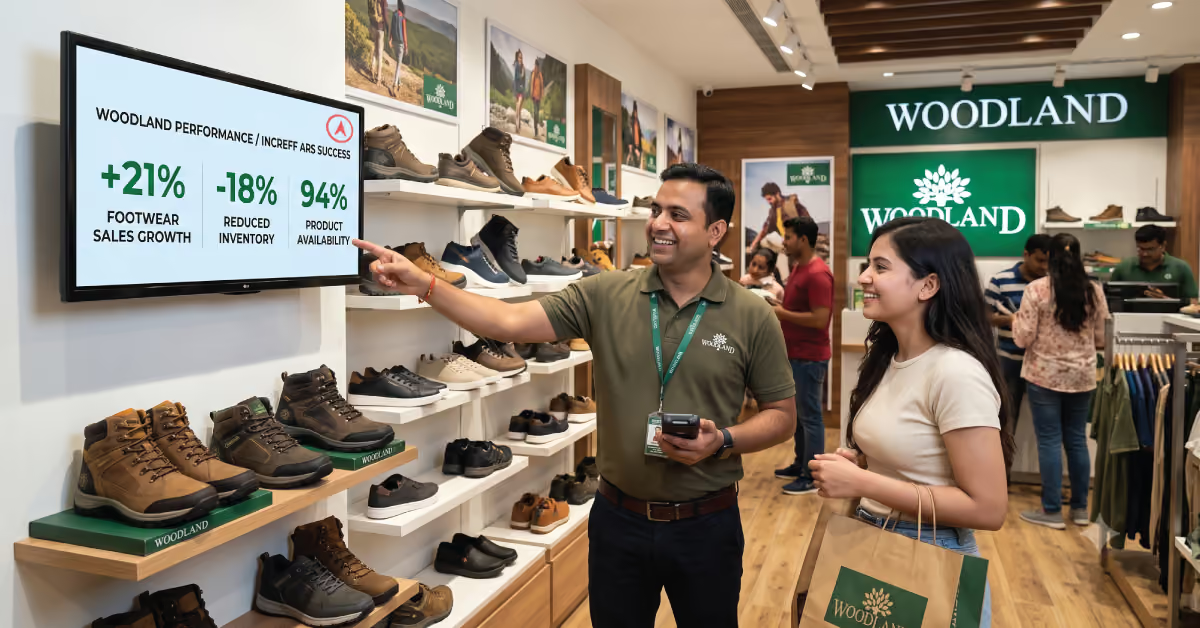


📌 At a glance: Woodland, one of India's most iconic outdoor and lifestyle brands, grew Footwear unit sales by +3.2% YoY on 18% lower store stock, cut overall stockouts from 13% to 5% in 120 days, and reduced Footwear Days of Holding by 90 days — by deploying Increff's Automated Replenishment System (ARS) across 264 full-price stores in just 105 days.
What Is This Case Study About?
This case study examines how Increff's ARS platform helped Woodland — a heritage outdoor and lifestyle brand with a nationwide store network — reverse years of inventory build-up and realign replenishment with real demand. After deploying ARS across Footwear, Apparel, and Accessories, Woodland achieved faster sell-through, leaner store stock, reduced stockouts, and improved margin discipline, all within a single selling season.
Client Overview
- Industry: Outdoor & Lifestyle Retail
- Retail Format: 264 like-for-like full-price stores across India (Footwear, Apparel, Accessories)
- Focus Area: Automated store replenishment, sell-through improvement, and inventory rationalization
- Key Challenge: Years of inventory build-up leading to high Days of Holding, chronic stockouts despite excess stock, and margin erosion through discounting
- Objective: Align store replenishment with live demand signals to reduce dead stock, recover shelf availability, and protect full-price sell-through
Challenges Faced: When More Inventory Creates More Problems
Woodland's retail network was carrying more stock than ever — yet shelves of the right products were routinely empty. The brand's core challenges were structural:
- Excess inventory, wrong places: Footwear stores carried an average of 314 Days of Holding (DOH) — nearly a year's worth of stock, with capital frozen in slow-moving and broken-size styles.
- Stockouts despite surplus: Overall stockout rates hit 13% at the start of 2026, with Accessories at 18% — the highest among all divisions, even as total inventory sat high.
- Inventory-sales mismatch across divisions: Apparel accounted for 35% of store stock but delivered only 21% of sales, signaling a deep disconnect between what was replenished and what customers were buying.
- Discount dependency: To move excess Apparel inventory, stores were discounting at an average of 47% — compressing margin without solving the root cause.
- C-class tail consuming shelf space: 78% of inventory was tied up in C-class styles, while just 22% of (A+B) styles drove 95% of revenue. The long tail was crowding out bestsellers.
- Late inwards disrupting Apparel sell-through: Jackets — a major contributor of Apparel revenue — were arriving late each month, creating demand gaps that no amount of reordering could recover.
Increff's Solution: ARS — Replenishment Driven by Live Demand
Increff deployed its Automated Replenishment System across all three divisions, replacing manual, manual replenishment with daily demand-signal-driven decisions at the style, size, and store level.
Explore Increff’s Retail Merchandising and Assortment Planning Software
Style-Level Demand Sensing
- ARS reads daily sell-through signals at the style, size, and store level — rather than relying on periodic manual review
- Replenishment recommendations are generated automatically, eliminating guesswork and buyer fatigue
- The system identifies which SKUs are genuinely fast-moving vs. what is simply sitting on shelves
Days of Holding Compression
- By right-sizing store stock based on actual demand velocity, ARS steadily reduced DOH across all divisions
- Footwear DOH dropped from 314 days to 224 days YoY — unfreezing capital that had been locked in slow-moving stock for months
Stockout Prevention Through Timely Replenishment
- ARS triggers replenishment before shelves run empty, rather than reacting after stockouts are reported
- This proactive approach allowed Woodland to cut overall stockouts from 13% to 5% in just 120 days
Discount Discipline Through Better Stock Alignment
- With the right inventory reaching the right stores, the need to clear excess through markdowns reduced significantly
- Apparel discount rates pulled back by 6pp YoY (47% → 44%), protecting margin even during a period of sales recalibration
"Future growth will depend less on carrying more inventory — and more on carrying more productive inventory."
Results: Where ARS Ran Clean, Every Metric Improved
Key Outcomes Summary
- Footwear units sold grew +3.2% YoY on 18% less store stock — proving that productive inventory outperforms excess inventory
- Footwear Sell-Through saw an increase of 7.3%
- Overall stockouts cut from 13% to 5% in 120 days across all three divisions
- Footwear DOH compressed by 90 days, freeing up significant working capital
- Apparel discounting pulled back 6pp YoY, recovering margin during a supply-driven reset
- Accessories demand flipped from −10% to +17% units YoY after ARS went live in March — at just 51% deployment
Why Increff for Multi-Division Retail Brands?
Increff is built for brands managing inventory across large store networks and multiple product categories:
- Style-size-store level replenishment — granular enough to prevent the mismatches that cause stockouts and overstocking simultaneously
- Daily demand sensing — no lag between what's selling and what gets replenished
- DOH and working capital management — built-in visibility into where capital is frozen and how to release it
- Discount discipline — by matching supply to demand, ARS reduces the need for markdowns to clear excess inventory
- Cross-division deployment — works across Footwear, Apparel, and Accessories from a single platform
- Phased rollout capability — divisions and categories can go live incrementally, with measurable results at each stage
Ready to Sell More With the Inventory You Already Have?
If your stores are running stockouts on bestsellers while carrying excess stock in slow-movers, Increff's ARS can realign your replenishment with live demand — and start showing results within a single season.
👉 Book a demo with Increff and see what demand-driven replenishment looks like for your network.
Frequently Asked Questions (FAQ)
What is ARS, and how is Increff ARS different from traditional replenishment?
ARS (Automated Replenishment System) uses daily sell-through signals at the style, size, and store level to generate replenishment recommendations automatically. Traditional replenishment relies on periodic manual reviews, historical averages, or buyer intuition — ARS replaces all of that with live demand data.
How quickly can Increff ARS be deployed across a large store network?
Woodland's deployment covered all three divisions and 264 stores, with Footwear and Apparel going fully live within the first month. Accessories reached 51% deployment within 75 days and is on track for full rollout.
What software can manage complex store-level replenishment triggers?
Increff's Automated Replenishment System (ARS) is built to manage complex store-level replenishment triggers. Instead of relying on fixed reorder points or periodic manual reviews, ARS reads daily sell-through signals at the style, size, and store level and triggers replenishment before shelves run empty. This proactive, demand-driven approach is what allowed Woodland to cut overall stockouts from 13% to 5% in just 120 days across 264 stores.
Which platforms help fashion retailers manage size run optimization across stores?
Increff ARS optimizes size runs by replenishing at the style-size-store level rather than the aggregate style level. It detects broken and slow-moving sizes, prevents capital from being frozen in the wrong size curves, and ensures each store carries a complete, sellable size run based on its own demand velocity. For Woodland, this granularity helped grow Footwear units sold by +3.2% YoY on 18% lower store stock.
Which platforms help analyze sell-through rates by variant and store for fashion retailers?
Increff ARS continuously analyzes sell-through by variant (style and size) and by store, distinguishing genuinely fast-moving SKUs from stock that is simply sitting on shelves. These live sell-through signals drive daily replenishment decisions and surface where demand is accelerating — for example, Woodland's Footwear sell-through improved 7.3% and Accessories demand flipped from −10% to +17% units YoY once ARS went live.