
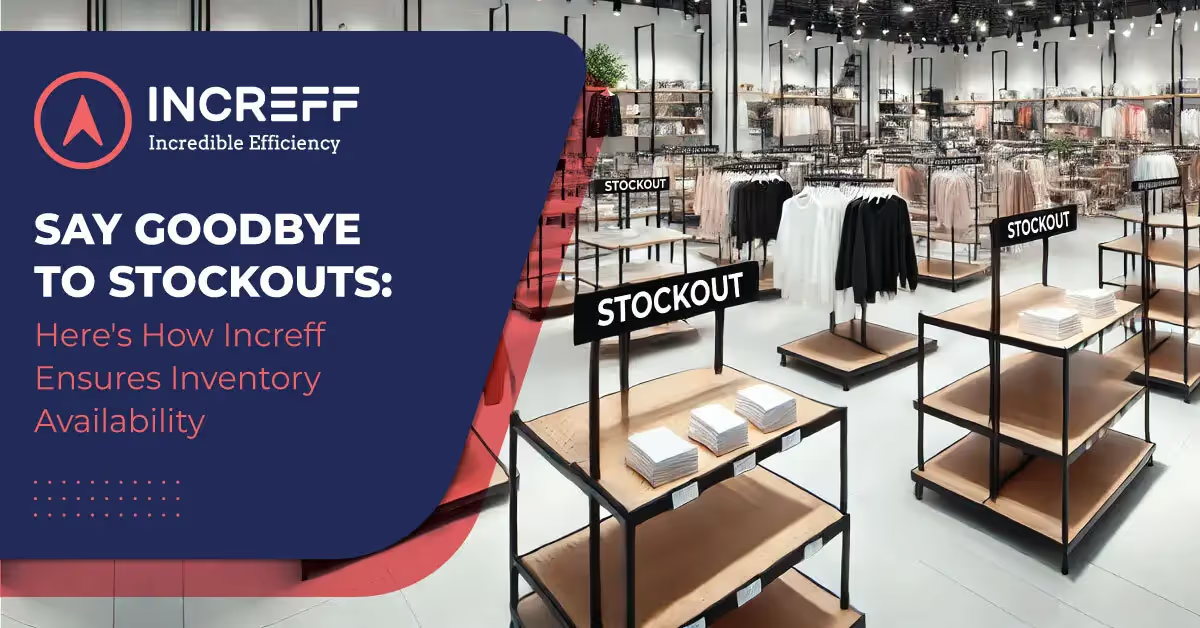





Stockouts aren’t a store problem, they’re a planning and replenishment problem and serial number inventory management makes execution measurable at unit level. Retailers prevent stockouts by continuously aligning store-level assortment, size curves, and replenishment to real demand using live sales signals and network-wide rebalancing.
A stockout happens when the right style-size isn’t available at the right store at the right time, so the customer walks out and the sale is lost. Increff Merchandising Software is a retail merchandising and inventory optimization platform that automates allocation, replenishment, transfers, and event planning using real-time sales and inventory data.
Want to see this in action for your network? Request a demo and walk through the exact workflows planners use day to day.
What causes stockouts in multi-store retail and how can merchandising software prevent them
Stockouts happen when planning decisions stop matching real demand at store and size level. Merchandising software prevents them by converting sales signals into daily actions: allocate, replenish, pull back, and transfer.
1. Assortment Planning Aligned with Sales Mix
Stockouts drop when each store receives an assortment that matches its actual sales mix, not a one-size-fits-all pack. Increff builds store-specific assortments so fast sellers don’t get under-supplied and slow sellers don’t crowd the shelf.
How it works
- Uses store-level sales history to define the right category/style mix per store
- Convert the mix into a store-ready quantity plan (by style and depth)
- Flags gaps where demand exists but supply is missing (stockout risk)
To keep actions clean at SKU level, teams pair this with serial number inventory management so each unit’s serial is visible during allocation decisions, and serial number tracking stays consistent from DC to store.
2. Perfect Size Ratio for Balanced Inventory
Size-based stockouts happen when the size curve is wrong, even if total inventory is enough. Increff sets size ratios by style so the most demanded sizes stay available while low-demand sizes don’t accumulate.
How it works
- Derives size curves from historical sales by style (and store cluster where relevant)
- Recommends size-wise allocation and replenishment quantities
- Prevents “phantom availability” where inventory exists but not in the sizes customers buy
In practice, serial number inventory management strengthens execution because serial number tracking prevents unit mix-ups when the same style has multiple size units moving across locations, each with its own serial.
3. Store-Style Ranking for Targeted Allocation
Allocation works when the best styles go to the stores that sell them fastest. Increff ranks store–style combinations using revenue velocity (revenue per day) so high-demand items are always available in the locations that convert.
How it works
- Scores each store–style pair on revenue/day and sell-through signals
- Prioritizes allocation to top-ranked stores before spreading inventory thin
- Improves availability of winners using the same inventory pool (high-demand items are always available)
4. Live Rate of Sale (ROS) for Precision Replenishment
Replenishment stays accurate when it’s driven by live ROS, not last month’s averages. Increff calculates real-time ROS by store and style, then recommends replenishment to a target DOH so availability stays stable.
How it works
- Reads real-time sales to compute live ROS for each store-style
- Sets a target DOH so stock covers demand without piling up
- Updates recommendations as demand shifts, so actions stay current
This is also where serial number inventory management supports execution, because serial number tracking makes it straightforward to reconcile what was shipped, received, and sold down to the serial on each unit.
5. Prioritizing Top Sellers for Consistent Availability
Top sellers stay available when they’re explicitly prioritized in allocation and replenishment runs. Increff identifies top sellers at each store level and protects their depth so customers can reliably find what they came for.
How it works
- Identifies top sellers by store using sales velocity and sell-through
- Prioritizes replenishment quantities for those styles first
- Keeps focus on the SKUs that drive repeat visits and conversion
6. Proactive Pullbacks and Replenishment of Underperforming Styles
Stockouts improve when slow movers are pulled back early, before they block space and cash. Increff identifies underperforming styles and bottom sellers, then recommends pullbacks so stock can be redeployed to where it sells.
How it works
- Detects low ROS and weak sell-through at store-style level
- Recommends pullback quantities to free space for winners
- Keeps the network’s inventory healthier and more responsive
Serial number inventory management matters during pullbacks, because each serial must be accounted for when units move back to a DC or another store, and serial number tracking reduces shrink and reconciliation gaps. In retail audits, unit-level traceability is the control that prevents “lost in transit” disputes from turning into permanent write-offs.
7. Inter-Store Transfers for Optimized Inventory
Transfers cut stockouts when stock is sitting in the wrong stores. Increff uses store-style rankings to recommend inter-store transfers so the best styles land where they’ll thrive.
How it works
- Find stores with excess stock and low velocity
- Finds stores with high velocity and stock risk
- Recommend transfers that improve availability and network productivity
Transfers are also where serial number inventory management pays off, because serial number tracking keeps every serial visible as it moves, which tightens inventory management and day-to-day management.
8. Event-Based Inventory Inflation for Peak Demand
Peak-season stockouts drop when you pre-build stock in the stores that will see the spike. Increff analyzes historical trends for similar events and recommends inflation where uplift is likely.
How it works
- Uses event history to estimate uplift by store cluster
- Recommends higher pre-event stock levels for likely spike stores
- Protects sales during holidays, promotions, and local events
Conclusion
Start small and stay measurable. Pick a category, then run the loop weekly: store assortment check, size curve check, live ROS replenishment, and network rebalancing. Keep the focus on availability for winners and tighter management of exceptions.
If you’re ready to see how this looks with your data, Request a demo and map the actions to your KPIs especially where serial number inventory management and serial visibility can remove reconciliation friction across stores.