
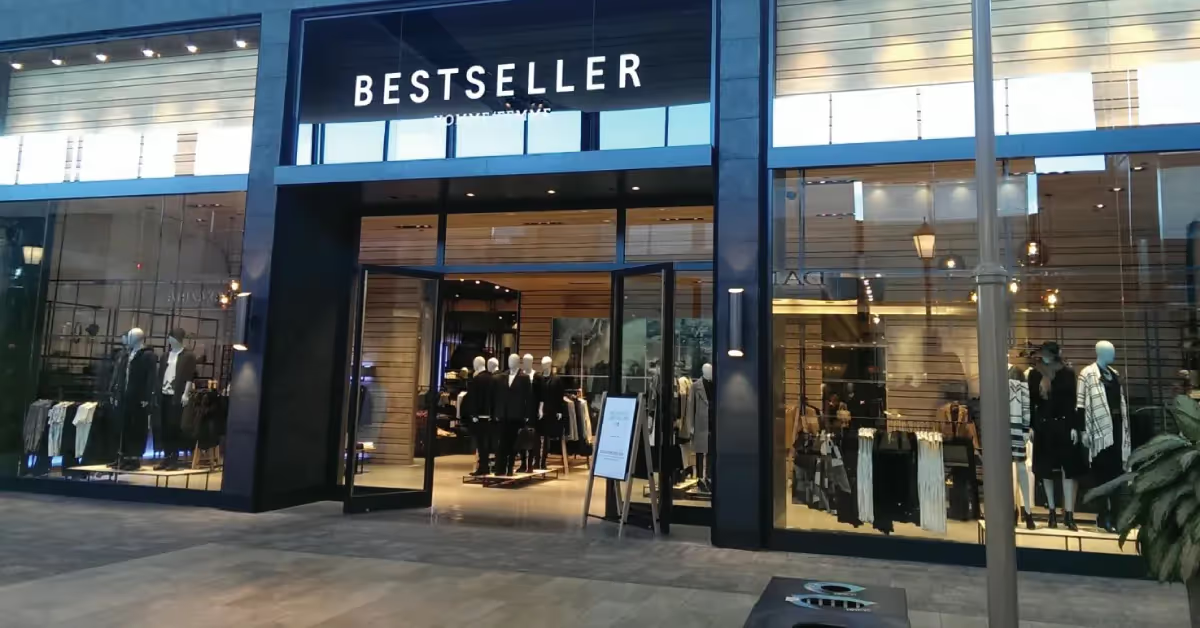


🗝️At a glance: A leading global fashion brand improved rate of sales (ROS), achieved near 100% accurate analysis, and increased conversion by optimizing allocation and replenishment using Increff’s merchandising and planning solution.
What Is This Case Study About?
This case study highlights how a leading global fashion brand improved inventory allocation and store-level performance using Increff’s allocation and replenishment solution. The implementation enabled precise demand planning, improved distribution requirements planning, and ensured inventory was aligned with actual store demand.
Client Overview
- Brand: Bestseller (Casual Wear Brand)
- Industry: Fashion Retail
- Presence: 500+ retail outlets
- Operations: Multi-format retail across India
- Objective: Improve allocation accuracy and demand-driven distribution
Challenges Faced: Why Allocation Inefficiencies Were Impacting Sales
The brand faced multiple challenges in managing store-level inventory:
- Difficulty in analyzing individual store demand led to inaccurate inventory distribution
- International sizing complexity made allocation to domestic markets inefficient
- Manual allocation processes using Excel were time-consuming and error-prone
- Stock was misallocated across locations, leading to lost sales opportunities
- Working capital was blocked due to overstocking in low-demand stores
Increff’s Solution: Demand-Driven Allocation and Replenishment
Increff implemented its allocation and replenishment solution to enable demand-based merchandising and planning.
Intelligent Demand Analysis
- Analyzed true customer demand at each store level
- Considered store formats and business constraints
- Enabled accurate demand planning across categories
Right Stock, Right Place Allocation
- Ensured inventory was placed in the right quantity and location
- Improved stock distribution across stores
- Enabled better distribution requirements planning
Store-Wise Demand Prediction
- Predicted store-level demand using historical performance
- Incorporated attributes such as category, MRP bucket, and customer profile
- Improved allocation accuracy and replenishment decisions
Automated Allocation and Replenishment
- Reduced dependency on manual decision-making
- Improved productivity by freeing up planning time
- Enabled scalable merchandising and planning across stores
Results: Measurable Impact Delivered by Increff
“The implementation improved allocation accuracy, increased sales conversion, and enabled near-perfect demand analysis.”
Key Outcomes Summary
- Improved rate of sales through better allocation
- Increased conversion by reducing stock misallocation
- Near 100% accuracy in demand and store analysis
- Reduced manual effort in merchandising and planning
- Better inventory utilization across stores
Frequently Asked Questions (FAQ)
What is demand planning in retail?
Demand planning involves forecasting store-level demand to guide inventory allocation and replenishment.
What is allocation and replenishment in retail?
It is the process of distributing inventory across stores and restocking based on demand.
What is distribution requirements planning (DRP)?
DRP determines how inventory should be distributed across locations to meet demand.
How did Increff improve allocation accuracy?
By using demand-driven algorithms to align inventory with actual store demand.
What is store-wise demand prediction?
It predicts demand at individual store level using historical data and attributes.
Which retailers benefit from allocation optimization?
Retailers with multi-store networks and complex inventory distribution.
Why Increff for Demand Planning and Allocation?
- Demand-driven allocation and replenishment
- Advanced merchandising and planning capabilities
- Accurate store-level demand prediction
- Efficient distribution requirements planning
- Reduced manual effort and improved productivity
Ready to Optimize Your Allocation and Demand Planning?
Book a demo with Increff today