
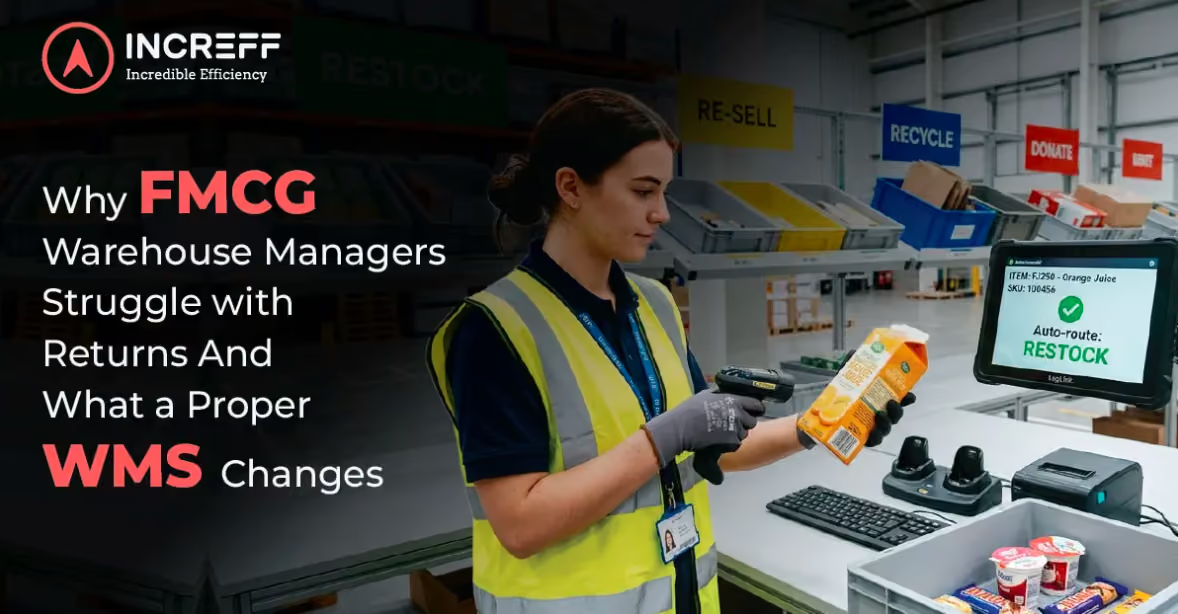





For FMCG warehouse managers, returns are where service-level promises meet warehouse reality. Pallets arrive mixed by SKU, batch, and condition. Expiry clocks keep ticking. Finance needs clean, auditable credits fast. Every hour a return sits unprocessed, it congests inbound lanes, eats into usable capacity, and turns recoverable inventory into write-offs, all while the same teams are racing to hit outbound cutoffs.
In FMCG, the pressure is sharper, high SKU velocity, strict QA requirements, and tight shelf-life windows mean disposition decisions need to be both fast and correct. Delayed or incomplete returns data makes it worse. Gartner estimates poor data quality costs organizations $12.9 million annually, and in FMCG, a single discrepancy can cascade into inventory errors, reconciliation effort, and customer disputes.
Key Takeaways
- Why FMCG returns are harder than forward fulfillment (speed, shelf life, compliance, and SKU variety).
- Where traditional, manual returns workflows break and how that impacts cost and customer experience.
- How modern warehouse management solutions standardize disposition, improve accuracy, and restore visibility.
- What to look for in a cloud based WMS to handle volume spikes, multi-site operations, and integrations.
- How Increff can help FMCG warehouses operationalize returns with consistent workflows and real-time control.
What makes returns uniquely difficult in FMCG warehousing?
FMCG warehouses handle vast quantities of diverse products daily. Returns can be more complex than initial shipments. The perishability of goods like food adds urgency. Items must be processed swiftly to avoid getting spoiled.
Returns in FMCG require careful inspection and accurate sorting. Identifying returned items and their condition is time-consuming. This complexity can overwhelm traditional systems and processes. Moreover, returns are often unpredictable. Demand fluctuations and consumer preferences change quickly. Warehouses must adapt, often without enough notice. Predicting return volumes accurately is challenging. FMCG warehouses also face space constraints. Storing returned goods competes with space for new stock. This requires strategic planning and allocation of warehouse resources. Mismanaged returns can escalate costs and reduce productivity.
Common issues in handling returns include:
- Lack of real-time tracking and monitoring
- Inadequate space management, leading to clutter
- Inefficient manual processing methods
- Delays in return processing and customer dissatisfaction
Overall, a well-managed return process is crucial for maintaining efficiency. Inefficient return management can damage brand reputation and customer satisfaction, especially in an industry reliant on customer perceptions. Addressing these unique challenges with an appropriate strategy is essential. Implementing advanced solutions can help to overcome these hurdles and optimize returns handling in FMCG. This is where modern warehouse management solutions become indispensable, offering the necessary tools for overcoming these intricate challenges.
Why do traditional returns processes fall short?
Traditional returns processes often lack the ability to handle complex returns efficiently. They tend to rely heavily on manual tasks. This increases the chance of errors during processing. Human error can lead to misplaced items and inaccurate inventory records.
Typically, these processes are unable to provide real-time visibility. Managers might miss important data on product locations and conditions. This delay in information impacts decision-making. Managers face challenges in quickly resolving return issues.
Traditional systems struggle with flexibility. They are not designed to adapt to sudden increases in return volumes or changes in consumer demand. This rigidity can result in backlogs, with items piling up without processing.
Key shortcomings of traditional processes include:
- Limited ability to track items throughout the warehouse
- Poor integration with other business systems
- High labor costs due to manual handling
- Lack of data insights to improve return processes
Additionally, these outdated processes often lack the ability to integrate easily with modern supply chain systems. Without this integration, operations become disjointed. This can result in bottlenecks, inefficient communication between departments, and a slow return process, which can ultimately harm customer satisfaction and increase costs. Modern solutions are necessary to address these inefficiencies effectively and create a streamlined workflow.
How do warehouse management solutions improve returns?
Warehouse management solutions (WMS) are designed to streamline returns processes. These systems provide accurate tracking and better inventory management. With a WMS, businesses can monitor returns from the moment they enter the warehouse until final disposition.
One of the standout features of warehouse management solutions is automation. Automation reduces the chance of human errors, increasing the accuracy of returns processing. It also allows quicker sorting and routing of returned products.
A WMS can integrate with other business systems, creating a seamless flow of information. This integration ensures data consistency across different departments. Additionally, it improves overall operational efficiency by minimizing data entry duplication.
Key advantages of warehouse management solutions include:
- Automated data capture and processing
- Improved inventory tracking and accuracy
- Enhanced visibility into returns operations
- Better integration with e-commerce and logistics systems
With these benefits, WMS transforms returns management into a more efficient and reliable process. It empowers businesses to handle higher return volumes while keeping costs under control. By leveraging sophisticated warehouse management software, FMCG warehouse managers can elevate their operations and meet customer demands effectively.
Why is a cloud warehouse management system a game changer for returns?
Cloud warehouse management systems (WMS) revolutionize how returns are handled. These systems offer unparalleled flexibility and scalability for FMCG businesses. By leveraging the cloud, companies can easily scale their operations as needed without massive investments.
Real-time data access is a significant perk of cloud solutions. Managers can make informed decisions with up-to-the-minute information. This timely access helps in addressing issues before they become problems, improving overall efficiency.
Cloud warehouse software provides cost-effective solutions without needing extensive hardware. This model reduces initial expenses and lowers long-term IT overhead. Businesses benefit from frequent software updates and maintenance, ensuring their systems remain current.
Some key benefits of cloud warehouse management systems include:
- Remote access for managing operations from anywhere
- Scalability to accommodate business growth
- Regular software updates without downtime
- Enhanced data security and compliance with standards
The integration capabilities of cloud WMS make it indispensable. These systems easily sync with existing e-commerce and logistics platforms, streamlining processes across departments. With seamless data sharing, companies can execute returns more efficiently, strengthening their competitive edge.
Cloud WMS also supports multi-location operations, providing centralized control over expansive networks. This feature improves visibility and coordination, making management simpler, even in the most complex setups. By adopting a cloud based WMS, businesses become agile and responsive in handling returns, turning challenges into opportunities.
What features should a proper WMS include for returns management?
A proper Warehouse Management System (WMS) is a cornerstone for efficient returns management in the FMCG sector. These systems are equipped with robust features tailored to streamline the returns process.
Firstly, automation plays a crucial role. Automated sorting and routing of returned items speeds up processing times. This feature minimizes manual handling, reducing errors and labor costs.
Integration capabilities are another critical feature. A WMS can seamlessly connect with other systems like ERP and CRM platforms. This connectivity ensures a holistic view of operations, improving coordination and data accuracy.
Real-time tracking and reporting functionalities offer significant benefits. They allow managers to monitor returns as they occur. With instant insights, businesses can quickly address discrepancies and make data-driven improvements.
Another valuable aspect is the ability to track return reasons. Understanding why products are returned helps in refining both inventory and quality control processes.
Key features include:
- Automated sorting and routing
- Integration with ERP and CRM systems
- Real-time tracking and reporting
- Tracking of return reasons for insights
Additionally, these systems support dynamic slotting. They optimize storage locations for returned items, enhancing space utilization and reducing clutter. This feature contributes to maintaining an organized warehouse environment.
Customer satisfaction is enhanced through timely updates provided by a WMS. Customers appreciate knowing the status of their returns. This transparency fosters trust and improves brand loyalty, turning a challenging process into a competitive advantage.
What changes in the real world after implementing a proper WMS?
Implementing a proper WMS transforms how returns are managed in FMCG warehouses. Businesses experience operational improvements and strategic advantages.
Firstly, processing times for returns are significantly reduced. This efficiency leads to quicker restocking and satisfied customers.
Inventory accuracy improves with a WMS in place. Automated data capture minimizes human errors, ensuring that inventory levels are precise.
Cost savings are another notable benefit. Efficient returns management reduces transportation and handling costs, boosting profitability.
The decision-making process also evolves. With real-time access to data, managers can make informed choices promptly, enhancing overall operational agility.
Key changes with a proper WMS include:
- Faster processing of returns
- Improved inventory accuracy
- Cost reductions in logistics
- Enhanced decision-making through real-time data
Moreover, a well-integrated WMS improves collaboration across the supply chain. By connecting various systems, it fosters better communication between departments, leading to synchronized operations.
Finally, customer satisfaction enhances as a result. Customers benefit from streamlined returns processes and transparent tracking. This not only strengthens brand reputation but also builds long-term loyalty, differentiating the business in a competitive market.
How can Increff help FMCG warehouses turn returns into a controlled, data-driven process?
For FMCG operations, the goal isn’t simply to “process returns” it’s to restore control: consistent inspection, faster disposition, accurate inventory updates, and clear accountability across teams and locations. Increff’s warehouse and inventory capabilities are designed to support those outcomes by standardizing how returns move through the facility and how each decision is recorded.
In practical terms, Increff can help FMCG warehouse managers:
- Operationalize a consistent returns workflow so every return is received, identified, and routed through the right inspection and disposition steps (restock, refurbish, quarantine, RTV, or scrap) based on configurable rules.
- Improve inventory accuracy and visibility by ensuring return status changes are captured in the system in real time—reducing manual reconciliation and preventing “ghost stock” that inflates availability.
- Reduce cycle time for sellable returns by enabling faster QA decisions and controlled putaway back to sellable locations—especially critical for short shelf-life SKUs.
- Support integration-led execution by connecting returns processing to upstream/downstream systems (order, inventory, and finance processes), so operational reality matches customer credits and inventory books.
- Create actionable returns insights through structured reason codes and reporting, helping teams identify recurring damage patterns, supplier issues, or packaging and handling gaps that drive avoidable returns.
Conclusion
In the fast-moving world of FMCG, returns management can be a significant bottleneck. However, with a proper Warehouse Management System, this challenge transforms into an opportunity. Such systems streamline operations and enhance visibility, turning returns into a strategic advantage.
A well-implemented WMS provides insights into return reasons, helping identify trends and areas for improvement. It goes beyond managing returns, optimizing overall warehouse operations and boosting efficiency. These systems not only improve customer satisfaction but also foster better supplier relationships by ensuring accurate and timely returns processing.
Ultimately, a Warehouse Management System positions businesses to handle returns seamlessly. It provides the agility needed to adapt to changing market demands. Embracing advanced solutions today can lead to a more resilient and competitive future for FMCG enterprises.
Request a demo.
Frequently Asked Question
Q: Key features to look for in a modern cloud WMS?
A: Look for real-time inventory visibility, barcode/RFID workflows for receiving/putaway/picking, smart picking and packing, shipping and labeling, and strong integrations with ERP/OMS/TMS via APIs. A modern cloud WMS should also offer scalability, role-based security, configurable workflows, mobile support, labor and productivity tracking, and dashboards/analytics with reliable uptime and automatic upgrades.
Q: What are the core advantages of a cloud WMS?
A: A cloud WMS delivers faster implementation and automatic upgrades, lower upfront costs, and easy scalability for peak volumes. It also enables anywhere access, simpler integration with ERP/OMS/TMS systems, and stronger reliability and security through managed cloud infrastructure.
Q: What integrations matter most for returns management?
A: The most common needs are integration with ERP (inventory and finance), OMS/e-commerce systems (order and return authorizations), and transportation/logistics systems. Integration keeps credits, inventory availability, and physical disposition aligned.
Q: What are the essential features of a modern warehouse management system?
A: A modern WMS should support real-time inventory visibility, barcode/RFID-based receiving and putaway, intelligent picking (wave/batch/zone) and packing, and end-to-end order fulfillment with accurate shipping and labeling. It also includes labor and productivity tracking, slotting and replenishment, returns management, cycle counting, and seamless integrations with ERP/OMS/TMS plus dashboards for operational analytics.