
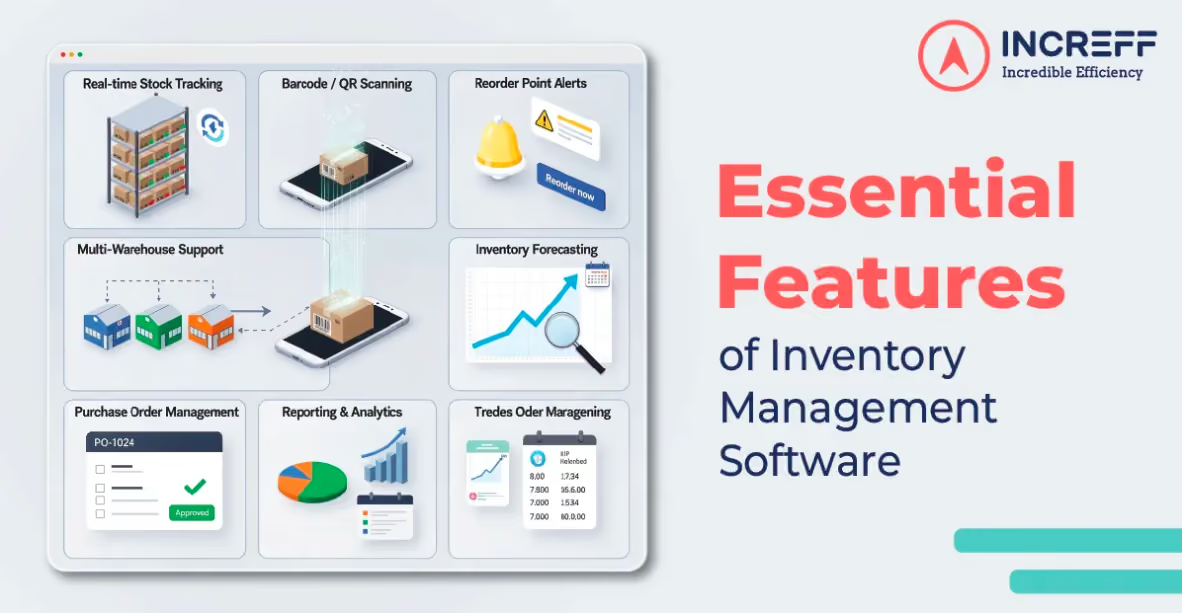





If you're an Operations Manager at a fast-growing retail brand or a Supply Chain Director running multi-channel fulfillment, you've likely hit the ceiling of your current system: oversold SKUs on marketplaces, audit cycles that shut down operations for days, and returns piling up with no clear restocking path. The cost isn't just operational.
Research indicates that businesses with poor inventory visibility lose an average of 11% of annual revenue to stockouts and overstocks combined. Yet most companies persist with legacy tools that were never designed for the speed and complexity of modern omnichannel commerce. Choosing the right inventory management system for your warehouse is one of the highest-leverage decisions an ops team makes.
Key Takeaways
- Real-time inventory visibility at the bin level is the most critical feature; everything else depends on accurate stock data.
- Cloud-based WMS platforms outperform on-premise systems in scalability, deployment speed, and multi-site management.
- The best software for managing inventory handles all channels e-commerce, quick commerce, B2B, and offline retail from a single inventory pool.
- Barcode/scan-based operations, serialization, and FIFO/FEFO controls eliminate the manual errors that erode warehouse efficiency.
- Deep integrations with your ERP, marketplaces, and logistics partners determine whether a system actually fits your tech stack.
- Returns management, real-time analytics, and role-based access controls are often underweighted during evaluation and disproportionately important in day-to-day operations.
What are the clear signs you need better Inventory Management Software?
Before evaluating features, it's worth recognising when your current system has already become a liability:
- Stock discrepancies across channels — sold inventory you don't actually have, or available stock that isn't showing up on marketplaces
- Manual audit dependency — wall-to-wall counts that require warehouse shutdowns and still return inaccurate results
- Siloed inventory pools — stock split by channel, creating artificial buffers and dead inventory
- Slow order processing — order-to-dispatch times that are losing you marketplace seller ratings and SLA penalties
- Unmanaged returns backlogs — returned items sitting in a grey zone between received and restocked, bleeding available-to-sell accuracy
What Are the 10 Must Have Features in Inventory Management Software?
1. Does It Provide Real-Time Inventory Visibility Across All Locations?
Real-time tracking is the foundation of every downstream decision. Your system should give you accurate, live stock positions at the bin level not warehouse-level summaries across every channel and fulfillment node simultaneously. This prevents overselling, reduces safety-stock buffers, and keeps available-to-sell figures accurate on every marketplace you're listed on.
2. Is It a Cloud-Based WMS That Scales with Your Operations?
A cloud-based WMS removes the infrastructure ceiling that on-premise systems impose. Cloud warehouse management systems offer multi-site management from a single instance, elastic capacity during peak sales periods, rapid deployment without large upfront IT investment, and automatic updates that don't disrupt operations. For brands expanding from one to ten warehouses, or from regional to nationwide fulfillment, cloud is not optional, it's the architecture that makes scaling viable.
3. Does It Use Scan-Based Operations and Serialization?
Manual data entry is the primary source of inventory error in warehouse environments. The best WMS systems eliminate it entirely through:
- 100% scan-based workflows at receiving, putaway, picking, packing, dispatch, and returns
- Serialization a unique code assigned to every item enabling complete item-level traceability and loss prevention
- Continuous scan reconciliation that maintains accuracy without requiring disruptive full audits
Serialization in particular delivers a rich audit trail from inward to shipment, dramatically reducing disputes with marketplaces and simplifying defective inventory isolation.
4. Does It Support Multichannel Fulfillment from a Single Inventory Pool?
Splitting inventory by channel is one of the most expensive habits in warehouse management; it creates dead stock, inflates safety buffers, and distorts demand signals. Your inventory management system for warehouse operations should fulfill orders across D2C, e-commerce, quick commerce, marketplaces, B2B wholesale, and offline retail from a single, unified inventory pool, with intelligent order routing that prioritizes fulfillment speed and cost efficiency across all channels.
5. Does It Automate Inbound Processes Including FIFO, FEFO, and Kitting?
Inbound accuracy sets the accuracy ceiling for everything downstream. Look for:
- FIFO and FEFO automation for perishable, seasonal, or regulated inventory (expiry-date or inward-date dispatch logic built in)
- Flexible UOM management case, carton, pallet, and eaches conversion for B2B and omnichannel operations
- Virtual kitting and bundling create and fulfill promotional combos as virtual SKUs without complex inventory setup
6. Does It Deliver Smart, High-Speed Order Fulfillment?
Order processing speed directly determines marketplace ratings, SLA adherence, and customer satisfaction. Evaluation criteria include:
- Dynamic wave picking that batches orders by channel, ship time, or priority
- Guided picking routes with visual and audio cues to reduce errors and improve throughput
- Scan-based pack validation with automated packing lists, shipping labels, and single-screen workflows for all order types
- Express/priority order flows that don't disrupt standard fulfillment lanes
7. Does It Handle Returns with the Same Control as Outbound Fulfillment?
Returns are consistently underweighted during software evaluation and consistently overweighted in daily operational pain. A capable inventory management system should manage:
- Scan-based return gate entry, GRN, multi-step QC, and status assignment
- Photo and video capture at dispatch and return receipt for dispute resolution and SPF claim processing
- Instant reconciliation with flexible outcomes restock, quarantine, or vendor return
- Universal returns intake across any warehouse node in your network
8. Does It Offer Advanced Analytics and Proactive Alerts?
Warehouse data has no value unless it drives decisions faster than problems compound. The best inventory management software provides:
- Real-time dashboards covering order SLA performance, inventory aging, operator productivity, and fulfillment metrics
- Proactive alerts for low stock, anomalies, compliance events, and SLA risks before they become bottlenecks
- AI-assisted query tools embedded in the interface for instant operational answers
- Complete audit logs for regulatory compliance and client reporting
9. Does It Integrate Deeply with Your Existing Tech Stack?
An inventory system that doesn't talk to your existing infrastructure creates its own operational silo. Non-negotiable integrations include:
- ERP systems (SAP, Oracle, Odoo, Unicommerce)
- Marketplace channels (Amazon, Flipkart, Myntra, Noon, AJIO, and others)
- Logistics providers for carrier selection, label generation, and shipment tracking
- POS and webshop platforms for omnichannel retail brands
- OMS platforms for near-real-time inventory and order sync across channels
10. Is It Designed for Operator Adoption Not Just Manager Oversight?
A system that warehouse operators can't use accurately is a system that will fail regardless of its feature list. Prioritise:
- Intuitive, scan-led interfaces that reduce training time (target: under 30 minutes for new operator onboarding)
- Role-based access controls for accountability, security, and operational segmentation
- Visual cues that make each warehouse process easier to execute correctly
- Mobile-compatible workflows for picking, packing, and returns via handheld devices
How Does Increff Address the Inventory Management Gaps These Features Are Meant to Solve?
Increff's cloud-based WMS targets warehouse inefficiency at its source not after it shows up in your marketplace penalties or audit reports.
Most warehouse accuracy problems aren't really technology problems. They're execution and visibility problems that went unmanaged because the system never gave teams the data to act earlier. Increff addresses both.
Real-time, bin-level inventory visibility gives warehouse teams accurate stock positions across every channel and fulfillment node not estimates refreshed on a schedule, but live data updated with every scan. That single source of truth is what eliminates the overselling, the buffer stock inflation, and the audit dependency that plague operations running on looser systems.
Scan-based serialization assigns a unique identity to every item from the moment it enters the warehouse, so every movement inbound, putaway, pick, pack, dispatch, return is tracked without manual input and without error. Aged inventory gets flagged before it misses its fulfillment window, and defective stock gets isolated without halting operations. Multichannel order fulfillment runs from one unified inventory pool, so whether an order is coming in from D2C, a marketplace, quick
Conclusion
The right software for managing inventory doesn't just track stock, it orchestrates every warehouse action to keep fulfillment accurate, fast, and scalable across every channel you operate. The 10 features above are the non-negotiables. Evaluate the best WMS systems against them honestly, and weight real-world outcomes accuracy rates, SLA adherence, deployment speed, and operator adoption over feature checklists. The gap between a warehouse that runs well and one that constantly firefights is rarely an effort. It's almost always the system.
Request a demo.
Frequently Asked Questions
Q: What is the most important feature in inventory management software for a warehouse?
A: Scan-verified execution tied to real-time inventory visibility. If every movement (receive, QC, putaway, pick, pack, ship, returns) isn’t validated via scans and reflected instantly in inventory status, accuracy degrades quickly especially during peaks. Everything else (analytics, automation, optimization) depends on trustworthy data.
Q: Which inventory management software is best for companies operating in India and why?
A: For companies operating in India, the best inventory management software typically combines real-time inventory visibility, marketplace integrations, demand forecasting, and multi-location inventory management. Retailers often prefer cloud-based platforms that can support omnichannel fulfillment and scale with business growth. Platforms like Increff are commonly considered by fashion, lifestyle, and retail brands because they offer inventory optimization, warehouse management, and omnichannel capabilities within a unified ecosystem.
Q: Which retail SaaS tools are best for optimizing inventory turns without hurting service levels?
A: Retail SaaS tools with AI-driven forecasting, automated replenishment, and intelligent inventory allocation are generally the most effective for improving inventory turns without impacting service levels. These platforms help retailers reduce excess inventory while maintaining product availability across stores and online channels. Solutions such as Increff focus heavily on inventory optimization and demand-led allocation, helping retailers improve sell-through and reduce stock imbalances across locations.
Q: Which tools can automatically allocate inventory to the best-performing channels or stores?
A: Modern inventory optimization and retail planning platforms can automatically allocate inventory using sales velocity, regional demand patterns, and store performance data. These tools help retailers distribute stock more effectively across stores, marketplaces, and fulfillment centers to reduce stockouts and improve sell-through rates. Automated allocation also helps brands react faster to changing customer demand.
Q: What platforms give planners automatic alerts when core styles fall below threshold stock?
A: Advanced inventory management and merchandising platforms provide automated low-stock alerts based on predefined inventory thresholds. These alerts help planners replenish fast-selling products before stockouts impact sales. Many modern systems also use demand forecasting to predict when core products may run low, enabling proactive inventory decisions instead of reactive replenishment.
Q: What inventory optimization tools help reduce inter-store transfers and associated costs?
A: Inventory optimization tools that support demand forecasting, intelligent allocation, and store-level replenishment can reduce unnecessary inter-store transfers. By placing the right inventory in the right location earlier, retailers can lower logistics costs, reduce fulfillment delays, and improve inventory availability. These tools also improve overall inventory balance across multiple retail locations.