
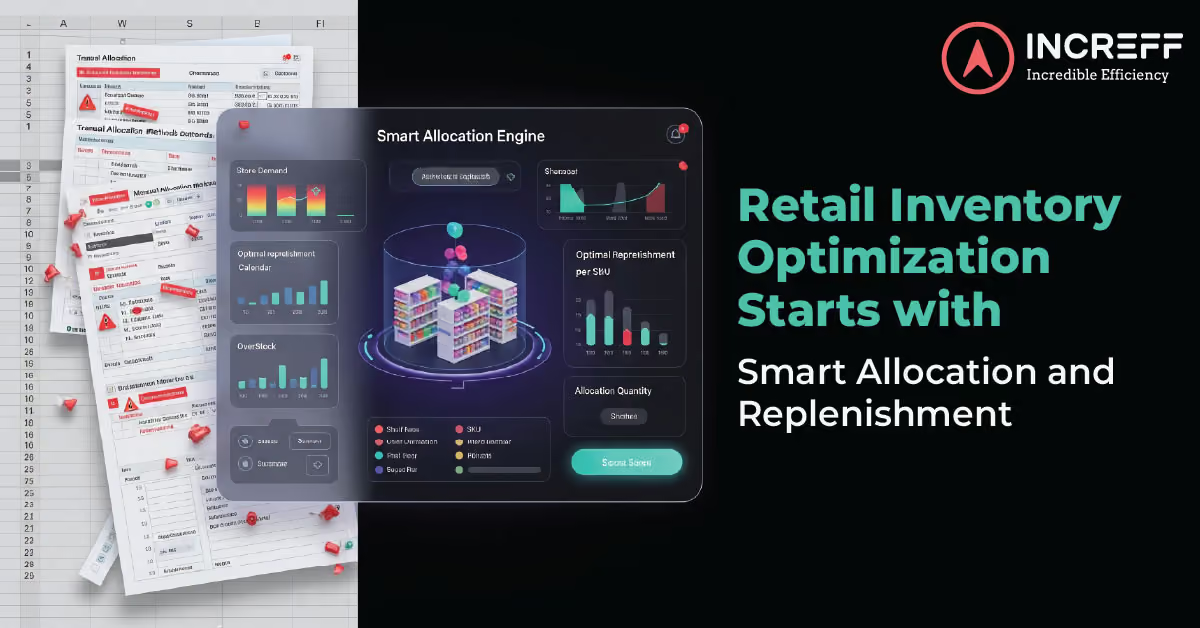





Managing retail inventory to improve profits? That's where allocation and replenishment in retail shine. Since markets shift constantly, products need to be available precisely when and where customers want them. Minimising both stockouts and overstock situations helps achieve this. Discussing strategies tied to retail success, this writing explores allocation and replenishment in retail.
Also read how to Increff does allocation and replenishment in retail with its merchandise planning software.
Key Takeaways
- Positioning products through smart allocation is crucial for inventory optimization.
- Sales and satisfaction increase with fewer stockouts and less excess stock. A game-changer, really.
- The role of technology? Indispensable in smart strategies for inventory.
- Inventory strategies require frequent reviews and tweaks for optimal outcomes.
- Increff's offerings shine with advanced allocation features.
What is Smart Allocation and Replenishment in Retail?
What defines smart allocation in retail?
Imagine products allocated smartly to locations based on forecasts and sales data. That's smart allocation in retail. Tailored inventory for each store's sales potential reduces overstock or lack of stock. Implementing inventory optimization software can help businesses align stock levels with real demand across every location. Consider locale-specific behaviors, and inventory tricks sync with market demands. But does that actually hold up in practice? Yes, when executed effectively.
How does replenishment differ from allocation?
The initial distribution of products is allocation. Replenishment ensures shelves stay neatly full—it handles restocking. Replenishment in retail keeps popular goods available without overstocking. Systems often use automated triggers, alerting when stock is low, enabling timely restocks to satisfy eager shoppers. Sound familiar? Because it’s essential for seamless operations.
What are the core principles of smart inventory management?
Smart management relies on understanding and applying three key elements: accurate demand forecasting, dynamic allocation, and timely replenishment. Advanced analytics and real-time data paint a picture of customer needs and market patterns, allowing retailers to match demand surges while avoiding surplus. Worth the effort? Absolutely, as efficiency translates to profit.
Why is Inventory Optimization Crucial for Retail Success?
Why do retailers struggle with inventory management?
Balancing unpredictable demand, disrupted supply chains, and endless SKUs is a tough task for retailers. The pandemic amplified these pains, urging the need for nimble systems resilient to market shifts—timely shifts can mean the difference between success and shortfalls. It’s a challenging yet rewarding journey.
What impact does poor inventory management have on sales?
Lose sales from stockouts, or waste funds on excess inventory—either way, poor management hurts profits and loyalty. Over 34% of buyers leave purchases unfinished due to unavailability, stressing the significance of inventory accuracy to keep customers committed and satisfied. The uncomfortable truth? It’s a costly oversight.
Why are smart solutions necessary for modern retail?
Fast-paced worlds require smart responses—today’s retail demands these solutions. Aligning inventory with present needs boosts sales, reduces waste, and adapts to change. Mixing e-commerce with traditional stores, a solid inventory system bridging online and offline makes a decisive difference. So what does that mean for your bottom line? Increased efficiency and profits.
Expert Insights
Retail inventory isn't all tech—it’s part art, deciphering consumer behaviors too. Smart logistics are only half; local demand nuances can’t be ignored for precision. Those who blend analytics with granular insights find customer-centric paths that lead sales and profits skyward.
How Can Retailers Implement Smart Allocation and Replenishment?
How to assess current inventory management practices?
Implementation begins with examining existing inventory maneuvers—scan sales patterns, stocks, supply chains. Spot flaws; mark improvements. Conduct SWOT analysis to gauge inventory strengths and gaps—leverage that to refine management tactics. It’s the foundation for improvement.
What technologies support smart allocation?
AI, advanced analytics, and machine learning transform regular allocation, offering insights into demand and forecasts. Cloud solutions provide real-time data, connecting departments for cohesive inventory management approaches. In practice, what I've seen work is leveraging these tools effectively across teams. They’re game-changers in strategy execution.
Which Tools and Technologies Facilitate Smart Inventory Management?
- Which software solutions are leading the market?
Foremost tools? Increff, Shopify, Salesforce—these epitomise allocation. Real-time analytics, automated replenishment, and forecasting shape these platforms, while Oracle and SAP show strength across large inventories. But here's the catch—choosing the right tool isn't everything. Exactly the point. It requires strategic implementation.
- What features should retailers look for in inventory tools?
Inventory tools need real-time analytics, integration, and automation. Significant features include forecasting, stock monitoring, and alert automation. Reports and performance insights guide allocation plans efficiently. In reality, most vendors won't tell you: not all features are created equal. Choose wisely for impactful outcomes.
When Should Retailers Review and Adjust Their Inventory Strategies?
When is the best time to conduct an inventory audit?
Quarterly audits align inventory with trends and goals. Identifying inefficiencies ensures timely adjustments. Pre-major sales or seasonal shifts? Ideal for inventory checks—it’s prep for customer demands. Now, this next part matters. Staying attuned is vital. A half-yearly revisit is good practice—big market or objective changes warrant audits too. Consistent reviews keep strategies in tune with demands, allowing quick reactions to shifting conditions. Sounds like a lot? It is, but it pays off. Efficiency is key.
How Increff Drives Allocation and Replenishment in retail to Address Inventory Challenges
Increff tackles hurdles with its Allocation & Replenishment solution, leveraging analytics to refine processes with precision and efficiency as the core. It addresses optimization challenges seamlessly.
Key Capabilities
- True Rate of Sale Precision: Calculates sales rates accurately, excluding stockout-related noise.
- Advanced Ranking Algorithm: Prioritizes inventory using store-style rankings, optimizing allocation.
- Local Demand Intelligence: Analyzes data for inventory alignment with local trends.
- Size Profile Optimization: Adjusts size distribution to cut down stockouts and surplus.
What Makes Increff Different
Increff's distinction lies in its Store-StyleRank™ algorithm for inventory rankings and seamless system integration, delivering precise inventory management solutions. Retailers using Increff see better turnover and sales gains. So yeah, it's a powerful tool for change.
Business Impact
Reduce stockouts, improve distribution—Increff's Allocation & Replenishment culminates in better sales and cost reductions. Faster fulfillment, satisfied customers—leading to stronger growth and ROI. This system empowers agile market responses. It sets a new standard.
Conclusion
Through the art of smart allocation and replenishment in retail, inventory optimizes profits and delights customers. Advanced tech spearheads the effort as regular strategic reviews align stock levels with demands. Companies like Increff offer insights and tools for proper implementation. Adaptation and precision in inventory strategies will dictate retail's competitiveness and success moving forward.
Frequently Asked Questions
Q: What is the difference between allocation and replenishment?
A: Allocation divides up initial inventory, whereas replenishment restocks to optimal levels. Both ensure consumer demands are met, maximizing sales potential.
Q: Why is replenishment in retail important?
A: Replenishment in retail keeps products available, reducing lost opportunities from stockouts. Conscientious strategies let retailers better manage cash flow—less inventory, smarter investment. Essential for sustained success.
Q: How do smart allocation strategies benefit retailers?
A: Smart allocation reduces both surplus and stockouts, placing inventory tactically to boost sales and satisfy customers by consistently matching their expectations. It’s about being prepared.
Q: What technologies support allocation and replenishment?
A: Allocation and replenishment benefit from AI, machine learning, and analytics, providing robust insights for demand forecasting and market fluctuation responses. They’re the backbone of modern strategies.
Q: How often should retailers audit their inventory strategies?
A: Conduct audits biannually, aligning inventory strategies with prevailing market factors—airdrops necessary adjustments for real-time adaptations. It’s a proactive approach.
Q: What role does technology play in inventory management?
A: Providing crucial real-time data, predictive insights, and automation, technology enhances inventory decisions and processes, boosting efficiency across operations. It’s indispensable in today’s landscape.